Exploring a life through biography
Have you been wondering if reading the biography of a long dead Australian prime minister is worthy of your precious time and attention? Well, despite the digital smorgasbord of ways to burn such finite resources and the constant cognitive burden of obligation and possibility, heavy with essential shocking news or celebrity trivia, viral socials and endless urgency, I was.
The lives of others are portals through time. By exploring subjects through biography, we may learn their worlds and reveal the forces which shaped them. Through this frame, reading them is therefore a necessary task for those interested in history, politics or humanity.
There is something profound about a long form journey through a lifetime and I rely unashamedly on the hard work and diligent research of others to reveal those characters who catch my eye.
In the most recent past I’ve read biographies which explore leadership as an aspect of their subject. Edmund Morris’ first volume on the life of Theodore Roosevelt came during lockdowns as did Winston Churchill’s biography by Andrew Roberts. I enjoyed Doris Kearns Goodwin’s Leadership: In Turbulent Times which investigates four different US presidents at varied times of their careers, in addition to her excellent exploration of Abraham Lincoln’s presidency in Team of Rivals.
Not all biographies have been politically inclined. I also enjoyed Mel Brooks’ All About Me, Dave Grohl’s The Storyteller: Tales of Life and Music, Werner Herzog’s Every Man for Himself and God Against All: A Memoir , Walter Isaacson’s Leonardo Da Vinci and Eddie Jaku’s ‘The Happiest Man on Earth’.
While most of these are internationally renowned, I was conscious of the absence of my own country and history in most if these lives. I read Kerry O’Brien’s Keating some years ago which made sense because I lived through his prominence and taught Australian history and politics. Yet as I read more, this gap became more obvious.
While exploring Abraham Lincoln, considering why he is regarded so highly, I wondered who, if not by scale of achievement but leadership and influence, the Australian ‘Honest Abe’ would be.
So I asked around and one name kept popping up – John Curtin, wartime Prime Minister of Australia from 1941-1945.
Curtin is easy to overlook not only due to the passing of time but because he was a man somewhat out of his time, a reluctant war leader with a stuttering dynamism whose most striking feature was a cast or ‘lazy eye’ (which is called a possum spotter where I come from) and who was seen by many as dour, shy and awkward.
This led me to David Day’s meticulously researched and sprawling John Curtin: A Life published in 1999 by HarperCollins Australia.

Curtin’s life is revealed chronologically from before he was born in 1885, the eldest son of Irish migrants in the colony of Victoria of the latter 19th century up until his death in the closing stages of World War Two.
In fact, it is the character of Curtain set against these larger political, cultural and social upheaval of this time which makes this book so compelling.
To say he was complex is an understatement, revealed in the arc of growth and change across his life. The avowed socialist and voice for workers, who fell out with a longtime friend and mentor because Curtin believed those workers should be ‘British’ (a.k.a. white) and that Australia was a place only for them. An agnostic who lost the love of his life to illness early but married the strong, deeply religious woman who would be his wife for 28 years. The pacifist and anti-conscription campaigner of the First World War who leads an embattled nation through World War Two. The hypochondriac alcoholic who stayed up all night because he couldn’t bear the thought of shiploads of Australian troops crossiing oceans under threat from Japanese submarines.
The boy from Creswick and the poor Irish enclave of Brunswick who rose to rub shoulders with giants of twentieth century history and stand against them to protect his country and values.
Day’s depth of effort and detail in research makes for a comprehensive exploration of Curtin. A huge amount of this information came from personal letters and papers sent to friends and family during his life, stored in his Prime Ministerial library in Perth, which perhaps offers a more reliable view than the media of the day because the intended audience was personal, not posterity.
Arranged chronologically, chapters are phrases attributed to him or about him, which is a creative way of having words rather than numbers, which seems appropriate for a man who made his career writing and speaking.
Curtin mentors and jokes, apologises, encourages and pontificates on the issues of the day. He makes references to his personal demons and struggles with mental health, and was clearly held in high regard by those who knew him well.
One such penpal was Jessie Gunn, younger sister of his first tragic love, Annie, who died suddenly and young, profoundly impacting the shy Jack Curtin. The Gunns were part of the network of socialists who Curtin connected with as a young man, and through their innocent letters, which served to maintain an indirect connection with Annie, Curtin emerges in the advice he offers about work and study, “Employ time well for it never comes again… A day that is wasted is gone for ever. So I appeal to you to utilise every opportunity that offers in study, in preparation, in qualification for the serious work of life. All of us have our respective duties to perform. We owe it to the world and to ourselves to perform this duties well. Write frequently in old note books and exercises and read carefully and diligently.”
His gratitude for the friendships he maintained and indeed, relied on during long periods of depression, is also evident when he writes “Friends are at once a rare and priceless possession; Silly is the person who cares little as to the endurance of friendships. The time always comes when the hour of darkness fixes upon his mind; when the dreams fade away; and dark gaunt despair begins to feed upon and devour the high hopes and the great expectations – In that hour Friendship stands as a shining light in the gloomy forest, leading the way once again to the lost wanderer; who thus gathers fresh courage and renews the fight for whatever cause he loves.”
Curtin’s rise to power was a struggle on many fronts, and the sacrifices made by he and his family is sobering. The journey to federal parliament, via Perth and interwoven political and journalistic phases between the wars, was rocky and destructive in private and public. Day’s intense research allows this story to unfurl at a steady pace without becoming laborious.
So much so that when Curtin’s public life reaches zenith as an unlikely wartime Prime Minister, we have a real sense of him when opposed to well formed heroic types like Churchill, or Roosevelt, or even his fierce opponent, Bob Menzies, as he stands up and holds firm on his beliefs about what the best thing for Australians and Australia was.
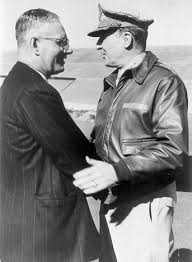
Day writes that he was “particularly anxious to examine Curtin’s life on its own terms, rather than to regard his first fifty-six years as being simply the precursor to his last four years as prime minister… this is an attempt to portray Curtin, ‘the whole man’ rather than just a study of his prime ministership. Curtin devoted his life to the search for a better Australia for its citizens and hoped in time it would become a ‘republic of the discontented peoples of the world.’ Day declares that, for some critical years of the twentieth century, Curtin was ‘the heart and soul of Australia.”
So I think that even if you know a lot about Australian history and politics since 1860, you can benefit from something this detailed and relatively unbiased.
We get all caught up in the history and politics of the US and Britain during this period, because it feels so much more dramatic and, well, interesting.
This is no doubt less dramatic but the tension is a slow burn and really more fascinating because Curtin is not a Keating, ambitious for sole power, but is genuinely, fatally interested in leadership for the value of service to others. He dashes himself against the rocks of leadership, weighed down and seemingly ill-equipped, but in the end does a mighty job of leading Australia during a most difficult time.
So why read it? Curtin’s life gives a great insight into the time and who doesn’t love a good deep dive into WW2? The research is meticulous and is the result of a great deal of trawling through his papers and letters, which would have been exhausting fun.
One downside is that Day’s style can be a bit speculative, particularly early on when he concedes not much is known about Curtin’s life, which can be annoying. There are a lot of leaps made and long bows drawn, but once you get through that there is a lot of enjoyment to be had.
They say that good books don’t expire – they just go out of print. This is a good book and you should check it out if you feel your fancy tickled.
 Charlie Hynes