Be Careful What You Wish For

Somewhere in my deepest thoughts , the fantasy and desire exists that one day I am called upon to live through and witness a great challenge in the history of people.

You know, the kind of event that forged great generations and filled our ancestors with steel and quiet purpose.

Selfishly, it was about testing myself, or having something to quantify. My ego wanted to rise above a great challenge, thereby uncovering my unassuming inner hero.

Yeah, I’m not sure about that anymore…

All because of this tiny virus with vast reach.

The beginning of this week was too casual. I mocked the toilet paper madness, emboldened by the comfortable certainty that we had time and not much would change.

How quickly those certainties melt away when the extent of consequence makes itself known. How fragile the gossamer threads connecting our lives to confidence appear when playing the game of ‘if this, then that…’

There is not panic, per se, in the streets. Not yet. More, a tangible tension in the faces on the streets and supermarkets. The cafes are still full, but people are wary of what they touch. The space between us has lengthened with caution.

In light of this rate of change, where each pulled thread unravels another aspect of life affected by the Covid-19 virus and associated lockdown. Questions arise. How do we do that? What if that happens? Imagine if…

It is the stuff of science fiction. An invisible force, seemingly beyond our control and imagination, tearing the fragile boundaries of comfortable society to bits.

With each passing hour, each cancellation and closure, the elements of a rich life vanish and anxiety rises.

This is the challenge I wished for, I guess, and that original desire feels more stupid with each passing hour as the extent and impact of this crisis becomes clear.

Internally, a curious mix of big game nerves, fear and optimism exists inside. The nerves stem from anticipation of the vague uncertainty beyond ‘it will be very different’.

Fear needs no explanation.

Optimism comes from the belief that as human beings, we have a great track record of enduring difficult times. It may be misty eyed, but history tells me from a aggregate point of view, human beings tend to rise to such challenges.

Wise idiom says look to the helpers. Look for the best of humanity to get us through. Despite the worst aspects of us, too easy to see in the supermarket aisles and wobbly phone footage of shrieking fisticuffs, I still have faith in the best parts of us.

And either we can be part of the good, or fight that pensioner for the last multi pack of loo roll and add bad juju to the mix.

I plan to be a helper. I plan to accept the challenge and teach on, whatever that looks like. I plan to follow Neil Gaiman’s advice to make good art. I plan to lean in on the great artists, read great books and watch great films. I plan be a good friend, citizen, neighbour, teacher and colleague.

There is another side to this too – a hope that after all the turmoil and the buffering and tragedy of the storm, we reach the other side with better regard for one another.

I hope we get to the other side with a more hopeful view of the world. That we expect more from ourselves and our leaders. That we have a higher threshold for the truth and greater integrity.

That we are clear eyed and critical of the wealth of information available to us. Like Matt Nurse, in his war on misinformation.

I hope we remember to think of others first. I hope that we break down some of the echo chambers and learn to appreciation for the things that add flavour and depth to existence.

Family. Friends. Travel. Sport. Theatre. Music. Festivals. Cinema. Restaurants and cafes. Good conversation. All of it.

Toilet Paper? Really?

Human beings have always fascinated me. What they do. What they say. Why they do and say what they do.

Family mythology have it that as a lad, I was drawn only to toys with people in them, humanistic ones. Army men. Action Man. Star Wars figurines. GI Joe. MASK. A Sandi doll, which came into my possession after a clerical error in the North Pole mixed up gifts myself and a female cousin. I kept the doll.

This abiding interest in humanity led me to teaching as a profession and writing as a hobby and interest. It has led me to great stories and novels, films, television along with Herculean feats of people watching and eavesdropping.

All to figure out who we are.

And one of the best descriptions of this I recently discovered for myself here, where Mark Manson explores the nature of our two minds, or the thinking and feeling parts of our identity and how they drive the car sometimes.

As the Corona virus sweeps the world, gusting fear to all corners, it feels worthy to explore more deeply.

As we consider the threat of global pandemic and witness the fragmented new media landscape soak society with information – both valid and genuinely insane – I’ve had cause to consider human behaviour again.

Because when threatened, the first thing people think to stockpile is…

Toilet paper.

Loo roll.

Shit tickets.

Pardon me? Did you say toilet paper?

The news of emptying shelves was, at least earlier this week, enough to raise a chuckle. Perhaps some people have too much time on their hands.

When the supermarkets and paper companies began making reassuring statements it became even more surreal. Still, I thought, it will pass and we will remember it vaguely, like the 1998 gas crisis that divided Victorian society into those with electric and those with gas hot water systems.

Then my local supermarkets were cleared out and, desperate to avoid using tissues or, even worse, kitchen paper, we headed out early on a Saturday morning to find supplies, like soviet hunter gatherers.

The shelves were empty. And now that the loo roll was gone, the tissues were next, and the rice and pasta (except the gluten free) and the hand soaps and sanitisers. Was this really the new heirarchy of needs when facing a global pandemic?

Then this went viral – Aah, Sydney. Of course you did…

In the search for why, history often provides answers, even though we believe no one has ever faced this. Blame our lifespan echo chamber, made worse by increasing narcissism and a tendency to ignore lessons from history.

In his 1841 book, Extraordinary Delusions and the Madness of Crowds, Charles Mackay set out to ‘collect the most remarkable instances of those moral epidemics which have been excited by one cause or another, and show how easily the masses have been led astray, how imitative and gregarious men are, even in their infatuations and crimes.’

He focussed on two such events of roughly the same time on two continents – the Mississippi Scheme of 1719/20 and the near contemporary South Sea Bubble. In addition, he added the Tulipmania of Holland and the low countries, where people went batshit mad and bankrupt for humble little flower bulbs.

Though these case studies were roughly three centuries ago, even now his words are disturbingly familiar, particularly in light of the great toilet paper crisis sweeping the globe so much faster than the virus causing it.

‘Whole communities suddenly fix their minds upon one object, and go mad in its pursuit. Millions of people become simultaneously impressed with one delusion, and run after it.’

Mmm… Imagine that

Human Beings fascinate me so much, as does history. When I think of all the people who preceded us, or their experiences and efforts to understand what it is to be human and watch the curious ways we behave, I feel equally overwhelmed and reassured.

Because either this is the Rapture or it will fade into history like so many other mass delusions. Either way, human history and the stories it contains are where we can look for wisdom and the answers we seek.

Which is why history needs to be studied, explored and shared.

Anyway, the Japanese have already solved the toilet paper issue.

Their solution is below…

The future is here. Cross the Rubicon.

Take Away with Neil Gaiman

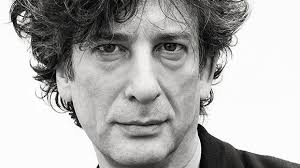
Neil Gaiman has a voice of honey and every uttered syllable belongs to the highest plane of elocution and style. You could listen to his easy tones for hours, but in this case, ninety minutes would have to do.

Neil Gaiman is also a polymath in the creative realm. His poetry, comics, short stories, novels and screen projects attest to this fact. He advocates for public libraries and the power of stories. He speaks of the importance of reading and for all those reasons, I went along to listen on a sultry Tuesday evening.

The Capitol Theatre on Swanston Street shines anew after a recent redevelopment by RMIT. Two black chairs on a white background, his name projected thirty feet high on the screen, set the mood. Outside, as we queued, a band of hare krishnas chanted and danced, offering a surreal and perhaps maddening element to the waiting.

There are always reasons not to do this kind of thing- go and listen in person. Too tired, too stressed, too busy. Increasingly, these are the decisions we take that leave us feeling like we are missing out in our modern, hyper-connected time.

Though with Gaiman at the peak of his powers, conquering the TV world with American Gods and also his Terry Pratchett collaboration – Good Omens, not to mention the well received adaptation of The Ocean at the End of the Lane for the National Theatre in London, I resisted the urge to put him into the too hard basket.

I was excited to see him because his infectious love of words and stories both intrigued and inspired me. On the one hand, he was able to clarify so many ideas that I, the teacher, was thinking and feeling about the importance of reading and writing stories in an age where so many argue it is old technology.

Richard Watts as convenor did a great job of getting out of his way. Thoughtful, erudite and considered, Gaiman wasted few words while covering a wide array of topics from the politics of rewriting the origin story for Poison Ivy, wading knee deep in the nerd sea, to the thorny issue of how you enjoy writers once you know they are horrible racists, like H.P Lovecraft.

And all those things were not the reason I went, though plenty of deep nerd fanboys and girls filled the theatre, testifying to the origin and extent of his popularity. I went to hear the writer and storyteller talk about that. Here are some takeaway snippets.

‘We tell stories to convey information to people who don’t exist yet’

And in the opening, as he spoke of the power of stories for passing information on, I came to know and feel why there was so much power in them. Gaiman has a way of using simple words to reveal the, ahem, ineffable nature of things. The compulsion to storytelling and passing it on that allow human beings to share information and knowledge beyond the limitations of our lifespans. Stories help human beings connect and empathise and solve problems.

Your memory… go there and start writing and all sorts of other things will turn up

His tale of how the Ocean at the End of the Lane appeared also spoke to me. There was humour in the end point, when he called his publishers and admitted that he feared he might accidentally have written a novel. Though it started with a person in mind, and an emotion, that of missing his wife, and the memory of a house he lived in, demolished in the early 1970s. So much of the stuff out there is about how writers construct their habits and routines and pens and paper and software and all that crap. Gaiman’s advice is simple and effective – go back and start writing about your life and see what else turns up.

Do something by doing it. Go off and learn. Don’t do a course.

This also cut through. Learning and courses, the life of perpetual study, can be a powerful form of procrastination. At this point, he was talking about everything from punk rock bands to adapting for television and film. There is a power in taking action and the naivety of not knowing is not a barrier in a world where, as Gaiman admits, there are no longer the gatekeepers and indeed, sometimes not even the gates. There was something very encouraging and reassuring in this message to just go off and do it.

Find the things you love and dive deep into them

And perhaps this was the most reassuring takeaway. That when you find the things you care about and disappear into them, the outcome does not really matter. And this links so well with his mantra to ‘make good art’. In the hurly burly of the modern world, where busyness is the ultimate brag and we spend so long distracted, led away from our interests and dreams, force fed fear and loathing by all the bad stories, this feels like really good advice.

After a reading of his soon to be published children’s book, Pirate Stew, he ended humbly, with good humour and gratitude – thanking the audience and Richard Watts for the occasion. In essence, it was a valuable exercise in eavesdropping on a man at the top of his mountain, reminding us that perhaps the antidote for the darkness of our times lies in a very old thing – the art of good storytelling.

The consequence of fear and shame – sometimes we don’t learn

Last year I decided to give some Year Ten students what they wanted most.

I gave them the chance to insult me in public. I asked them to stand up and give me their worst – consequence free. It was a free hit, I said. Go for it.

Donuts.

Plenty were happy for others to stand up and insult me, but no one, not even the loudest loud mouth or clowniest class clown was at all keen.

I cajoled. I encouraged. I point blank begged, promising no consequences.

Nada.

Eyes danced nervously between floor, ceiling and each other. Students shifted and shuffled in their seats. Cheeks flushed. Nervous giggles stuttered out from narrow mouths and clenched teeth.

Sure, they were only allowed to insult me using Shakespearian language, generated from a worksheet over the previous five or so minutes. There were caveats.

The lesson was not doing what I imagined. In the end, I put a kid on the spot. He stood up and timidly called me a ‘slabbering, fowl-eared pignut’.

Crickets. Snorting, giggling crickets.

Someone else? I asked, anticipating that once the shame levy broke I would be flooded with insults.

Nope.

While I managed to get a couple of lads to have a bit of a go, the activity flew like a lead kite. Despite having the will – and there were students in there who no doubt wanted to insult me, the social dynamic would not allow it.

A few months later, as we neared the final examination period and the clock ran down, much of our teacher talk turned to how little effort many of the cohort were putting in.

Lazy. Entitled. They don’t care. They don’t want to work. I said this myself. I said it to some of my students. I cracked the whip and dangled carrots to no avail.

So we might have left it at that, but something irked me like a thumb splinter. This trend was growing. We knew it was coming and we knew it was happening but we did not have any real data around why.

Guy Claxton, eminent UK education leader and promoter of Building Learning Power talks about a high shame, low risk culture in some schools. It is a concept that intrigues me as I think many of us, even as adults, can identify with it.

I’ve been thinking a lot about how social fear impacts learning. These kids did not only disliked taking risks – in fact, they would rather not know something than take a risk and find out.

This week, early in the new school year, I was chatting with new Year Ten students. We were in that early space – testing each other out, getting to know routines, you know the drill. Why not now? I thought.

I asked them to complete a quick write – five minutes of describing what it felt like to not know something, or get something wrong.

They wrote.

We shared.

I asked them to tell me the words they used to describe their feelings. And…

Look at those negative words. Shame. Useless. Ignorant. Degrading.

Wow.

And the ratio to positive is also a worry. If we claim that our students are learning to have growth mindsets, then where does snapshot data like this, flawed as it may be, leave us?

In the conversation that followed, we discussed the core activity in schools – learning.

What do we do a lot of when we are learning? We get it wrong. We don’t know.

Joseph Campbell is often credited with the following phrase, without hard evidence, but it appears to be a distillation of ideas he held after a lifetime studying mythology.

The cave you fear to enter holds the treasure you seek.

We have some work to do this year. But the experience led me to reflect on how I react when I don’t know something. How do I react when I make a mistake?

If effective teachers are effective learners now, and not only in the past, then they must walk the walk.

Time to go find that cave…

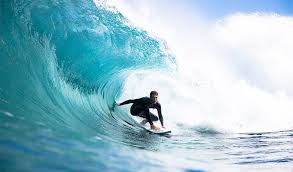
The Truth About Surfing

There are a lot of things to like about surfing. There is the laid back lifestyle, all year tan, girls in bikinis and endless summers. Other benefits include physical fitness, a strong connection with nature and the ability to use words like ‘worked’ and ‘stoked’ without sounding like a total flog.

Sun, sand and perfect waves beneath a clear sky are a hell of a lure for the modern human.

This ideal is true if you live in Hawaii or the Maldives or even Queensland. It is fine if you grew up with sand in your jocks and zinc cream in your hair. This myth is all good if you grew up near the coast or spent youthful summers at a holiday house or camping out in the annexe of a family caravan. You can probably surf like some ride bikes.

Perhaps you want to learn to surf, or claim you can because of that backpacker tour or lesson your girlfriend bought for your birthday. You know, the one where the instructors in green vests pushed you on a foam board through whitewash, and you stood up like a drunk with vertigo and straight lined it to the beach, hooing and haaing with arms aloft like a champ.

Okay, maybe that describes me too.

One truth about surfing is that what I just described isn’t surfing. Compared to surfing, it would be like riding on a velodrome with training wheels or ten pin bowling with a ramp and those bumper things in the gutter.

One truth about surfing is it is the hardest thing I have ever tried to learn, including long division. It is the albatross around my sporting neck, the Newman to my Seinfeld. Surfing is the pigeon to my statue and the fly in my sporting ointment and or soup. It is the dragon I spend too much time chasing.

It is a chase that has lasted more than ten years, and though the tone might sound complaining, it is more a lament. I too was drawn in by the image of surfing and the way people spoke about it. Tim Winton, in his novel Breath, wrote eloquently about the thrill of learning to surf and the spirituality of the lifestyle. To be honest, reading Winton only makes the frustration worse because it describes a soulful experience that has so far eluded me despite grinding effort.

I started learning to surf in my mid twenties, lured in by quick success of a first lesson and a mild case of quarter life rut. There were certain challenges to overcome – I grew up a long way from the coast and didn’t really like the beach.  Normally that would be only a mild obstacle, assuaged with the application of effort and practice, for surfing is a great deal more than taking a few strokes and standing up on a wave. Without the knowledge of currents and tide times and weather conditions, learning to surf can quickly reduce itself to paddling around a lot, drinking seawater and worrying about sharks.

When the wind is up and the current is running, you can spend everything you have just getting out beyond where the waves break.  On a learner board, which in my case was roughly the size of the HMAS Melbourne, it is impossible to duck under the waves, even in small conditions. My abiding memory of those early sessions was the effort of balancing myself with the quick realisation I often looked like a person in trouble in a flood, grasping at driftwood. Sometimes in choppy conditions it felt like there were gangster slaps coming from all directions.

Surfing back then was all sore arms and salty burps, with the odd short ride in the white water to keep me coming back.  It was about learning not to panic when you were caught on the bottom, that seaweed was natural and every shadow did not make a shark.  It was about getting shouted at by other surfers and learning line-up etiquette and university level meteorology. The urge to give up was a constant companion.

I also learnt that there was a difference between surfers and people who surf. People who surf are aggressive and drop in on you. They are always in a hurry and resent you being there. Surfing is an activity to be conquered and measured and mastered.  Surfers are all like the Dude from the Big Lebowski. They whoop you onto waves and smile as you paddle by them. They speak slow, like Queenslanders, and have a quiet confidence that indicates they know something awesome about life.

The thing that changes them, steals ambition and sends you on a search is the very thing that keeps me turning up for punishment time and again. It is the thing that makes me squeeze my once athletic frame into a neoprene suit slash nappy, pick up 8 feet of fibreglass and paddle out into a winter sea for a free salt water enema and blue lips.

The truth about surfing is told in the peace you find out the back between sets, where time is a construct and nothing matters but the next lump on the horizon. Well, either that or the sharp rush of the last strokes before liftoff, when you ascend by the power of water and snap to your feet, or go over the falls to practice holding your breath, the usual outcome for this scribe.

Despite all the rejections and lost hours, all the days when swell disappears and there is nothing but close-outs, the truth about surfing is the very thing that keeps me coming back for more. It goes against all rhyme and reason, and defies the constant sense of dread I feel when I pull into the car park and lay eyes on the breakers.

But I’m not really a surfer, just a person who surfs not very well. Maybe Tim Winton is the man to ask about the truth.

Comments

Here we go again…

Hi, my name is Charlie and I am a writer.

This moment feels as heady as I imagine it would be to stand up and concede you are an alcoholic. (I’m not, by the way. An alcoholic is someone you don’t like who drinks just as much as you do, apparently)

No. I am ending a double life. I’m coming out as a writer.

The truth is, I have always written and always tended to hide it.

Why?

Shame. Embarrassment. Fear. The fact they will all criticise and laugh at me.

Who are they?

I don’t know. The imagined ‘them’. My family and friends. Strangers. Colleagues. Students. People I met a long time ago, people I’m yet to meet.

I wrote compulsively as a kid – journalling, short stories, poems and books. I wrote angsty teenage personal and reflective pieces. I write long form and dabbled. In secret, for the most part.

I fell in love with the idea of being a tortured artist and bought endless notebooks and pens. I wanted a black turtleneck. I fell in love with black ink on white paper. A couple of years ago, I got into fountain pens. Stationery is my dirty obsession. I figure it is less harmful than heroin or meth, so who cares?

Like so many people with double lives, I created alter egos and nom de plumes to protect me from the filthy shame of being a writer.

Also, as a teacher, I wanted to keep my writing life separate from my teaching life. Not for nefarious reasons, but because I didn’t want them to know I was a person outside the confines of respectable professionalism.

I wrote about travel. I wrote about current events and life and all the issues of getting through it. I tried to be funny. I tried to figure out all the existential stuff, make a record of the delving into all the compelling and weird questions I had about the world.

I have a curious mind – and I was ashamed of it. I burned to know why – to explore the world and humanity and strive to understand why we do what we do. But I thought the world didn’t want me to be that. Gee, I wasted a lot of time living all the other people’s expectations I’d imagined and gleaned.

I wrote about sport. I wrote about how terrible I was at dating. I posed and explored deep socratic questions like, what would happen to a squirrel with a nut allergy? Why do people cheer at sporting events when the attendance is shown, but get angry in a traffic jam?

In creating alter egos, I was able to write and publish and get the itch scratched. But I never really found my own voice, I suppose, living through the frame of some made up person in order to protect myself from some horrible fate, largely imagined.

Now, in middle age, the yearning to write is as strong as ever even though the shame and fear of getting it out there also persists. To this end, no one has seen my writing for some time. My girlfriend is suspicious and a little annoyed by my reluctance to share it.

That needs to change. Not for everyone else, but for myself and my own integrity.

Over the last few years, as time passed and mortality crept into my thoughts like a menacing, creepy voyeur, I have been thinking about the missing pieces of the puzzle. What would I like to do more of?

Writing always came back. Indeed, it never really left, but I was terrified of confronting it.

So now I have made a decision to start writing and publishing under my own name. It is a terrifying move. Seriously, I am bricking it.

This is me walking the walk and returning, in some ways, to something I have always done and always really enjoyed.

As to what it will be? What will I write about? Well, over the last few years I have gradually stoked the ashes of my dormant curiosity about the world and passion for learning.

The flames have returned, and I managed to formulate something of a mission statement for getting through the rest of whatever I have left of this gift of time and consciousness and agency.

To nourish and share a curious mind so that we might honour the gift

So that is what this is. Feel free to drop by whenever you fancy. I’ll be here.