Growing

Becoming gradually or increasingly.

That is one dictionary definition – action, a process easily linked to learning.

As we emerge from lockdown hibernation, whatever our situation, it is hard to imagine we do so unchanged.

Growth is natural and automatic in the early part of our lives. It just happens. We get bigger. We change. We become, gradually and increasingly.

Beyond physical growth, there is the emotional and psychological realms. We accumulate experience and knowledge.

Stuff happens and we grow.

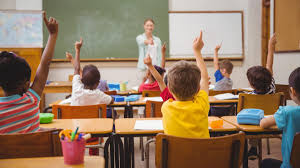
Photo by João Jesus on Pexels.com

As we ready ourselves for the return to work and face to face teaching, thinking about what that looks like and how it will work occupies much thinking time.

I wonder how students may have grown, for better or worse.

The shutdown extends long enough to lay down new habits and break old ones. As trivial as some may appear, many will affect us for the rest of our lives.

Will you shake hands with strangers upon meeting? Will we ever wash our hands like we used to? Will we want to stand cheek to jowl at sports stadiums and on crowded trains?

Probably not. Growth is, I remembered, not always linear and incremental.

Sometimes growth is exponential, traumatic and explosive.

Like many, upon graduating from university my feet itched. I wanted to see the world.

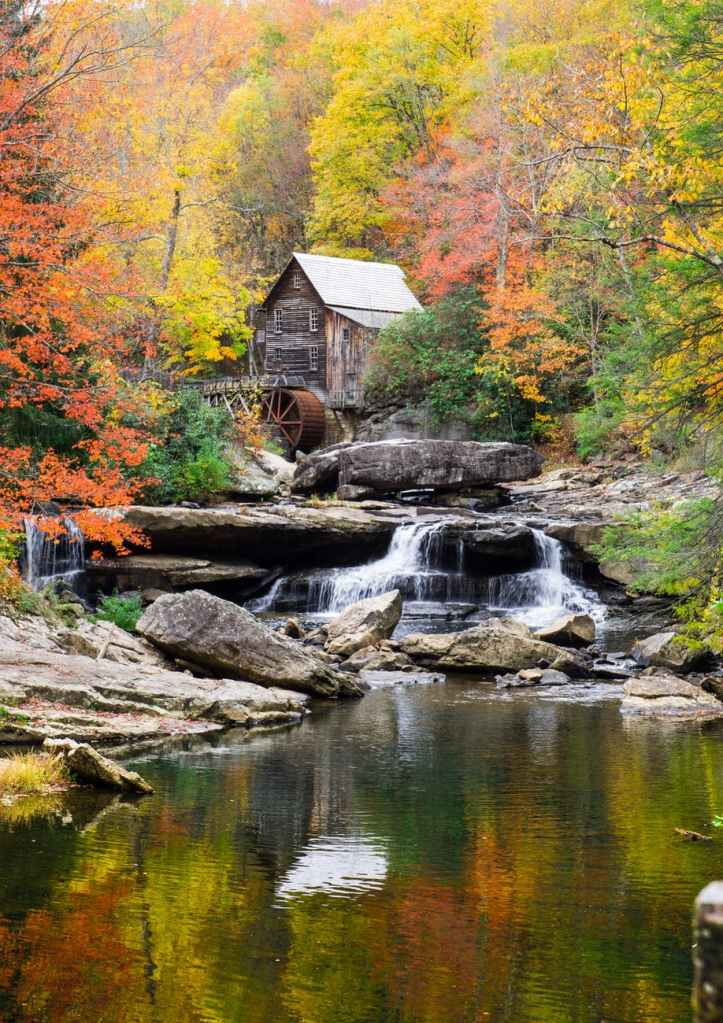
This desire led me to Camp Minnehaha, West Virginia as a camp counsellor. The camp was idyllically set in Pocahontas County.

As a qualified teacher, I was given the youngest cabin to look after. A bunch of eight year olds, most away from family for the first time, was well outside my wheelhouse.

We spent a week setting the camp up and preparing for campers to arrive. Once the program started, I coached basketball during the day and did odd activities throughout.

The hours were long and the work hard, but the momentum of routine meant there was not a lot of time to think about it.

After three weeks, my first day off arrived. Usually this meant being paired with other counsellors and heading out for a well earned break, but I was paired with local staff who went home for the day.

So my day was to be spent in the tiny town of Marlinton. They has a Dairy Queen, a river and an internet enabled computer in a shipping container public library. Every pickup truck had a gun rack in the back window and from time to time, fighter jets buzzed the town during low flying exercises.
The routine on a day off was you’d be dropped into town early in the morning and collected later that night, after lights out. There was plenty of time to kill.

I wasn’t so bothered by the solitude, to be honest. I figured that mooching and writing and reading in the library would suffice.

Then, at the cash machine, I learned that there was no money in my account.

The smell of an oily rag does not do my financial situation any justice. I left Australia with a round the world ticket, 500 bucks in cash and a thousand on a credit card. Which, as it happened, was now maxed out.

The week before I’d asked Mum to liquidate some of my assets and shift the money across. This was intended to see me out until the end of camp, when my 1100 USD payment would come through and get me to the next place.

I called her, anxious, only to learn that she’d placed it by cheque and it obviously had not cleared in time. How will we explain cheque waiting times to children in the future?

There I was, calling card credit running out, a whole penniless day ahead in a strange country town on the other side of the world, with no way out.

I completely and utterly broke down. Breathy sobs burst out like I was a toddler. My Mum did the best to console me, but I couldn’t talk, so I said goodbye and hung up.

As important moments for growth, it was fairly inane on reflection. No one died.

I walked up and down the main street a little more, wondering what I could do, and fortunately I saw the guy who dropped me off parked in the main street. I asked for a lift back, returning to camp unsure of what I would or could do.

When I got back, the camp director met me and offered the chance to sleep in the infirmary. It was quiet and away from everyone else. So I slept off and on for most of the day, completely exhausted.

It was a low day. I felt like I’d been hit by a truck. Such a small thing, relatively, but I was totally depleted.

My skin did was not enough to contain me. No one could do anything, the day I had envisaged would not happen, and my one day off a week was done.

The next day, I went back to work. Eventually, it was all forgotten. I grew, just a little bit, but a little of my identity was formed.

The growing was not subtle. It was harrowing and sudden. It felt like a wrenching, violent thing inside. I could not suppress or control it and I did not know it would happen.

No one else did either.

Reflecting on this memory, twenty years on, caused me to think about the growth and change this pandemic event has had on our students.

They may have grown remarkably over the last two months. They may have been depleted and broken open. They may have shed their skins.

Maybe nothing changed. Maybe they sat in their rooms and played video games of watched Youtube. Maybe I’m being all misty eyed and putting too much mayonnaise on it?

It is worth keeping in mind that learning and growing is not linear and incremental. Sometimes growing is more a rending and cleaving than a gentle progression.

The Sacred Cow Series – What Is It For?

Values change.

What would your grandparents make of reality television? What would they say about marriage equality? About non-binary gender identification? What would they say about mental health, or veganism? What would they say about middle aged men on scooters? Bottled water?

What would your great grandparents say about these things?

It is easy to forget that attitudes and values change so much over time. The White Australia policy was demolished less than fifty years ago. In 1960, there was great shame in having a child out of wedlock. Being gay was a criminal act. You did not need to wear a seatbelt.

If you share these facts with a fifteen year old now, what would they say?

You can disappear easily down this rabbit hole into speculation, but the truism persists that some things change and some things do not when it comes to values.

In the realm of education, what has changed in that time? Well, it could be argued that the answer is a lot and not much.

Certainly, the tools and reach of connectivity is different. In many schools, learning spaces and buildings have a space age quality, all glazed bricks, huge screens and funny shaped tables.

Conversely, much has not changed. If you travelled back in time and kidnapped a teacher from 1900, then deposited them in a modern school, how much would be unfamiliar?

Chances are, they would recognise a great deal in the dynamic. Sure, it would be noisier and there would be less whacking, but the process would be familiar – teacher in charge, students consuming and interacting with work in chunks of lessons broken up with summative assessment.

The learning objective would be familiar also – to progress students along a pathway into, after thirteen years, either further study or work. The way meandered through high stakes summative assessment and ranking, then into narrower and narrower channels until a vocation was reached and specialisation achieved.

What was rewarded was the consumption of knowledge and recall, the accumulation of knowledge transferred from a knowing entity (the teacher, the textbook, the curriculum) to the receptacle (the student).

The values inherent to the system were the same for students as those desired for employees – diligent, reliable, consistent, steady. A good student met deadlines, wrote legibly and never, ever interrupted the teacher. For most, specialisation was the ideal rather than general range.

Information was the currency of exchange, measuring the success in learners. We would refer to a student’s ‘general knowledge’ and promote the development of this through interaction with a limited number of resources. Test scores quantified this process.

The Encyclopedia was critical for most home scholars, preceded by books and newspapers as sources of information.

These sources were carefully curated and refined through the publishing process. Newspaper editors and style guides protected the reputation and standards of reportage.

Publishers forced authors to meet extremely high standards of quality on the arduous road to being published.

One could look at nearly all resources and understand that a lot of time and effort went in to the information we consumed to build knowledge.

The crime of passing off another’s work as your own was heinous. The integrity and provenance of information was highly valued and demanded.

The reward for making this journey was a stable job for life. Society valued those who stuck fast and were loyal to their employers and their needs. They desired workers who were predictable and specialised.

Education, and the values behind it, served the function of creating workers for an industrial system.

By and large, when you reached the workforce, learning was a thing left behind. You were allowed to put your feet up if you liked. Apart from certain occupations, like medicine, the majority of people could thrive while the tools of learning atrophied.

Would you agree that this world no longer exists?

The very notion of a career or job for life seems quaint in the volatile global environment. Moreover, the idea of a steady job for life is not that appealing to many people anymore.

Employers don’t have the same need for a steady workforce who will do what they are told and deliver the same limited thing week in, week out until the gold watch is passed over.

If the outcome we desire from education has changed, have update what we value? Should we be asking what is it all for?

I have fallen for the lazy generalisations all too readily. These kids are lazy. They have it too easy. They won’t read. They don’t care about the world around them. They only want to spend time on a screen. Their writing is atrocious. They don’t proofread. They write like they text. Add in your own here…

What if we have it wrong? What if they can do these things, and more, and they are curious about the world? What if they just value different things to what we do? What if they know that most of what we do isn’t relevant to their needs?

This is where I find myself at the moment.

We value handwriting because it was drummed into us as a measure of a grown up (albeit, I never understood why one benefit of the status of doctors was appalling handwriting).

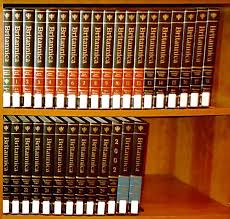
We valued information because scarcity made it so – a set of 32 hardback Encyclopedia Brittanica volumes will set you back 1400 bucks, even though it has been out of print since 2010.

We valued the ability to recall and regurgitate vast amounts of information in a high stakes environment as a measure of intelligence.

The Encyclopedia Brittanica app is now free to download on the app store, but unlimited, advertising free access costs 14.99 per year.

If there is an easier way to demonstrate the reduction in value for information, I’d like to see it.

Going a step further – the open source version, Wikipedia, is free.

The Internet changed the world forever. As Mark Manson declared – the best thing about the Internet is anyone can publish. The worse thing about the Internet is anyone can publish.

The Internet didn’t just take the gates down, it shot the gatekeepers.

In doing so, information that once needed to be retained was now on demand. Anyone on earth with a device and internet connection can access the galaxy of human thought and endeavour if they know where to look.

Therefore, the retention of information and knowledge is not as valued as it once was.

Will they know what to do with the information?

Well, that is a curly question. Plenty of dogs around the world can go and find the newspaper, but I’ve not heard of one that can read it.

Which leads me to the sacred cow of purpose. What is a school education for?

Beyond the basics of literacy – the ability to read and write is a minimum standard not up for debate – we need to consider the purpose as students head out into the post school world.

For our roadmaps are not always accurate. They do not lead where they once did, and what used to have value when they arrived no longer does.

At the risk of getting waylaid in the debate over twenty first century skills, we should focus instead on developing twenty first century values.

Which are not so far removed from the best of the old bunch when you think about it, with one major difference.

We should not prepare our students for a world where learning only belongs in schools.

We should not construct our learning on consumption ahead of creation.

We should not value the retention and regurgitation of information over the ability to interrogate and criticise where information comes from.

The impact of this shift fundamentally changes the role of teacher in the learning process. As well as curating learning materials and experiences, teachers need to be model learners. They need to demonstrate and live desirable mindsets.

Teachers need to take risks. They need to make mistakes. They need to keep learning. Curriculum and assessment should serve this purpose.

We should value range, not specialisation, perhaps. We should encourage students to be flexible and transfer their knowledge to new settings.

And in tackling the question of the purpose of education, we might identify the ghosts in the machine and allow them to finally rest in peace.

Function over form, process over outcome.

What is it for?

The Sacred Cow Series – Labels Limit Learning

People have an amazing ability to live down to your expectations.

In their book, Remote: Office Not Required, Jason Fried and David Heinemeier Hansson explore the world of remote work and associated issues.

Published in 2013, they could not have imagined that the ideas they explored would become relevant to a wider audience under a pandemic.

In light of recent experience, their remote working ideas transfer easily to education.

The sacred cow series aims to explore some of the principles and beliefs that inform the way we teach and learn.

Which leads us to the next sacred cow – the habit of labelling our students.

Weak. Lazy. Bright. Clever. Gifted. Talented. Dumb, Dim. Best student. Worst student. Average student.

If there is a teacher out there who has never used, or does not use these labels for students, kudos to them.

This sacred cow is not so much a flawed principle of education, rather a bad habit.

Like many bad habits, its origin is difficult to pinpoint. Certainly, there is influence from the very human need to categorise and chunk things together. It is also a cognitive action which allows us to sort and retain lots of information.

There are historical influences at work too. One function of education was to sort and filter students into groups. The act of setting and streaming students reflects this. As did the varied division of schools into vocational or academic institutions.

Educational theory also promoted the labelling of students. Piaget’s child development theory was still prominent in my pre-service education, twenty five years ago, and while it is simplistic to say this encouraged teachers to place students into boxes under this theory, it did.

So, the development of the labelling habit is the result of many forces working together, none of them malicious.

Let’s forget the blame game and get down to looking at the impact of labelling in schools. Hattie’s research into effect size indicated that teachers not labelling students was a really impactful on student achievement.

This is intriguing. Could what we call students, our descriptions of them, really have that much impact on their achievement?

Of course it does. Regardless of our level of self esteem, human beings really care about what other people think about them. Feedback influence self talk, and soon enough

Students working through puberty, forging their identities and trying the world on for size, are arguable the most susceptible to being limited by the labels placed on them.

Once I began looking and listening, our habit labelling of students was obvious. It was like buying a new model of car and then seeing it everywhere. ‘Wow, I never knew there were so many Subarus on the road!’

We label at the beginning of the academic year. We label in staff meetings. We label in student reports. We label in casual conversations with colleagues. We label in parent teacher interviews.

We label when we plan. We label when we assess.

‘My class is so weak! That kid is lazy. This kid will never pass. That kid is my best student. This kid is really clever…’

At the most extreme, there are nastier implications. I once had a colleague who labelled students according to which university they thought they belonged: ‘That’s a Latrobe, that’s a Melbourne, that’s a Monash. Uugh – that one will be lucky to get into TAFE!’

It sounds even uglier looking back, though at the time it looked little more than a eccentric affectation.

I wonder how much damage those labels did…

I’ve even had colleagues come to me and ask for assessment to be reviewed because ‘they are my strongest student and there is no way this mark reflects their abilities.’

In the spirit of eyeing cows, we need to look beyond why and how this habit emerged and decide if it is something which adds to the optimal environment for learning.

Labelling students sets boundaries that are very hard to exceed. The habit makes our lives easier as we sort and process our students, but the negative impact of labelling is something we should take seriously.

Of course, if you are a person who likes proving people wrong, then labelling presents less of a problem. Most people prefer compliance over rebellion, however.

Too many of these labels are outdated. They were formed in a time when the British Empire spread around half the globe.

If we were planning a trip to Africa, would be pull out an Atlas from 1901 for guidance? Good luck finding Rhodesia and Nyasaland.

If we are to recognise current best practice, supported by long term evidence that incorporates what is being discovered about learning and the brain, how can we persist with the labels we use?

It is not the act of naming that is the problem, it is the branding of students for life. It is limiting their capacity to grow beyond the boundaries we set for them.

This is not only bad practice, it is morally and ethically wrong beyond being unprofessional.

Piaget himself admitted the limitation of his theory in terms of the fixed nature of the developmental stages. It was wrong to suggest that students progress on a continuum, fixed and linear.

fMRI scanning has allowed for huge advances in our of the human brain and how it works. The understanding of Neuroplasticity means we know that learning can and does continue and no student has to miss the boat.

Which says we need to take account of our habits and decide if they still fit.

If we follow the research, if we believe in individualised learning and we believe that learning is a lifelong pursuit, then our labels need updating.

Labelling students with generic, stereotypical monikers can no longer be seen as best practice. It is a bad habit we must change.

In his book Atomic Habits, James Clear built on the work of Charles Duhigg in his exploration on the impact of habit in our work and lives. Clear argues that in order to identify and change bad habits, you start by making them visible and calling them out. He uses the analogy of the Japanese railway system, who use a ‘pointing and calling’ method to ensure safety.

When a train approaches the platform, for instance, the operator will point and say ‘signal is green’. The platform attendant will point to a door and say ‘doorway is clear’ before the train departs. This is seen as a way to make things visible and identify problems before they become too serious.

The time has come to point and call our habit of labelling students. If nothing else, they create barriers to learning and restrict the growth and development of young people in our care.

Labels speak to our bias and also our unconscious habits, allowing us to process huge volumes of information.

In light of current understanding of impactful approaches in education, our habit of labelling students in perpetuity can finally be challenged.

In doing so, we might provide the space for students to live up to expectation, not down.

As Aristotle mentioned, we are what we repeatedly do. Therefore, excellence is not an act, but a habit.

The Sacred Cow Series: Volume Does Not Equal Rigour

More is better.

This is a prolific belief in humanity. It serves a purpose.

The drive for more has seen human endeavour push itself to exciting places, far beyond the realms and limits of possibility.

In education, this principle underpins many approaches to teaching and learning, reflected in pedagogical habits and principles of learning institutions around the globe.

It is manifested in the long held and prevalent notion of content as king. This is the oft- mentioned ‘rigour’ of education, dividing excellent institutions from the rest.

The COVID-19 lockdown offers an opportunity to reflect on many principles we hold true, almost without question. As discussed before, perhaps this experience, for educators and education, might offer a once in a lifetime opportunity to examine some sacred cow principles to see if they still fit.

It is an opportunity to reflect on and explore some of our principles and stress test them for a modern age.

Two books have pushed me in this direction. One, Ray Dalio’s Principles, records his principles for work and life, tested and refined across more than thirty years of building an investment house from scratch.

His example suggests you define your guiding principles and publish them, refining and developing as you go to maximise clarity of purpose and action in any situation.

The other is Factfulness: Ten Reasons We’re Wrong About the World – and Why Things Are Better Than You Think, by Hans Rosling et al. One aspect of his book that sticks in my mind is the assertion that many modern views and opinions are based on the data and reality of the world thirty or forty years ago.

This series will explore some enduring principles of education according to my observation. It will allow us to eyeball some of the sacred cows and principles we hold true and test their validity.

Once, a job interviewer asked how I would ensure rigour in my teaching practice.

This common question is designed to sort the squirmers from candidates who think on their feet.

Stuck, uncertain of the answer, my instinct was to meet a question with a question. ‘Well,’ I said, ‘how do you define rigour?’

They struggled to answer, and I did not get the job. The best they could manage was to blunder about curriculum coverage and ensuring students did the work.

Which highlights how ‘rigour’ in education is automatically trotted out as standard but is, in reality, ineffable to many.

In the main, rigour is shorthand for content.

For too long, good teaching has been defined as the amount of work set and completed by teachers and students. A rigorous curriculum covered a lot of ground, meaning students knew more, meaning they were better learners.

Of course, this rigorous curriculum invariably led to a high stakes summative assessment. This ‘Grand Final’ of recall and memory measures and sorts learners into categories, which in turn opens or closes the vocational pathways required by society.

Which was really the hidden purpose. This model makes education the equivalent of the Hogwarts sorting hat.

Is this a pathway to deep learning? Does it develop the right dispositions and habits for lifelong learning?

Maybe not… but it meets societal needs, albeit with a flaw. At the heart of the learning was simple consumption.

It was a one way system. Teachers filled themselves up with knowledge and then passed it on to students, filling the tabula rasa.

‘Better’ institutions fostered compliant cultures where more content could be covered and more consumption occurred.

This, I argue, is where you find that rigour the interviewer asked about.

A reliable and effective educator got through the curriculum, kept up with the marking and knew the content.

A good student did all their work, memorised the content and could recall and apply it to a high stakes summative assessment.

It was mutually beneficial. Everyone went home feeling like a solid day’s learning occurred. It was, and is, exhausting in many ways, but not very dynamic. You could get away with rinsing and repeating.

It may be an idea whose time has come. Indeed, there may even be a moral component to resolving this issue.

Is it ethical and moral to prepare students for life beyond school using an outdates industrial model that values consumption and compliance over everything else?

Is it ethical to not at least challenge this model since we are no longer delivering students to the vocational certainties that once existed?

Might it be contributing to higher levels of anxiety and depression amongst young people?

The paradox is, current educational research and best practice tells is that ‘coverage’ of curriculum content is far from optimal in terms of education and deep learning.

The 21st century learning model speaks to that (despite being badly named) . Good learners need to be lifelong. They must be flexible enough to adjust and pivot to new experiences. Many vocations and jobs now require near perpetual learning and training.

The what is not as important as the why and how. Yet we still peddle a consumption model of learning that focuses on memorising and short term performance.

The purpose of learning, then, should not simply be sorting our students into groups. It should also equip them with the ability and dispositions to transfer knowledge and skills.

This requires more than passive consumption – it requires agency.

One common issue in education, a barrier to progress in many cases, is time. Teachers consistently say that the greatest use of time is covering the curriculum and getting through the content.

It seems logical, then, to reduce content.

This talk is cheap unless we also evaluate and challenge our attitudes to what constitutes rigour.

Teaching should not just be a series of activities set by teachers and consumed by students. We need to leave time and space for deep learning.

This is a real challenge in modern education, but perhaps in the current climate, where we are forced to strip back the volume of content, we might learn that volume of content does not and should not equate to rigour.

In fact the opposite – it leads to highly able consumers of information who lack the critical skills to act on the wealth of information available.

To paraphrase Tim Ferriss, if you optimize for outcome you get paid once. If you optimize the process, you get paid again and again.

The volume of content does not equal rigour. Time to change the tune.

Eyeing Sacred Cows: Education in a Pandemic

Maybe this isolation is not such a bad thing for educators?

A caveat here is the relative safety and security I enjoy as a middle class knowledge worker in Australia. No one I know has died, or is even sick. I don’t really know many people who have lost their job, either, and those who have are doing okay at this point.

This obviously allows me to see upside where many others might know the opposite.

One thought keeps coming through, however. One day, we might look back on this forced isolation as a positive thing, despite all the horrible elements. As Zeno of Citium mused when he learned all his luggage was lost in a shipwreck, “Fortune bids me to be a less encumbered philosopher.”

Maybe the fortune we experience now will allow us to think on some of the sacred educational cows we possess and send them into history? Maybe we might become less encumbered educators?

On a personal level, I’m roughly three weeks into remote teaching English to students from 12-16 years of age. We are using Google Meet as the conduit, delivering lessons using the normal timetable.

The first week, leading into the end of term Easter break, was giddy excitement for many, students and teachers alike. This was something from science fiction, after all, made reality with a creeping suddenness.

We spent a couple of weeks preparing, including a student free training day which allowed teachers and other staff to climb that steep curve of uncertainty and see what remote action might look like.

Despite still being on campus, we ran meetings via Meet, and over the course of the day we were able to shake off some of the liminal discomfort of playing in this new space.

In truth, there was a real sense of achievement at the end of that day. In reflecting on the largely positive mood of teachers, I concluded that it was so successful as a professional learning and development day because it combined forced risk with forced engagement.

In other words, no one could opt out.

The uncomfortable truth for many teachers, and I throw myself into this group for large parts of my career, is we can and do stop learning. At least, we lose our edge as learners in the busy environment of school and life.

This is more widespread than we might acknowledge, and it seems rarely a conscious choice. Raising this creates dissonance, or downright anger, when you suggest that teachers aren’t great learners. It is a long held sacred cow in our profession.

I suggest that this is due to the gradual accumulation of bad habits and mindsets that reduces the ability or capacity of many teachers to stay sharp with learning.

At the beginning of your career, there is no choice but to learn and learn quickly. Teacher training has never been great at providing the nuanced experience that time in the classroom does, nor should it ever claim to.

In a general sense, these are the years you are madly creating your own style and learning the tradecraft of the classroom. You make many mistakes and learn from them, disappearing up blind alleys and adding tools to the diverse utility belt every teacher needs.

Over time, as you become more comfortable with these things, you reach a plateau where you deal with most things that arise. Systems and routines are stress tested and refined. A lot of teaching becomes automatic, so there is no need to stay vulnerable and reflective, like good learners do.

Life fills up. Maybe you get married and start a family, or maybe you rise through the ranks and take on more stuff. Maybe you do both at the same time. Maybe you return to study, and learn the certainties that go with that.

Life gets busy. There is less and less to go around. PD days become a good opportunity to get out of school and maybe have a nice lunch. The best ones offer a sugar hit of enthusiasm that excites you and reminds you of the thrill in finding a better way.

Yet it tends to die out when you get back into the mix at school and all the things you need to do take priority and energy away from that thing you knew would make a huge difference.

In addition, busy becomes a byword for effectiveness and status. Like Tim Kreider writes, it is a trap many fall into, particularly in the modern, hyperconnected world we live in.

This is how so many of us stop learning, or stop being good learners.

And in the past, it worked okay. Curriculum was fairly static, the flat circle of repetition allowed us to be more cynical as we progressed, knowing that what is old is usually made new again.

A lot of learning was transactional. We gathered subject knowledge, curated and sharpened our tradecraft so we could pass it along to students in a sequential and orderly way.

Our purpose, then, was the transfer of knowledge to the unknowing and imminently enlightened.

We were gatekeepers and guides, instructors and lecturers. We had to know first, and sometimes, when this knowledge needed upgrading, we could cram and bluff and get by. This was often complained about, or ignored altogether.

Many teachers achieved mastery in limiting change and discovering workarounds.

Alas, too many accomplished teachers lost the sharp edge of our learning because we never needed to feel the discomfort of the learning process. We protected ourselves from the shame and embarrassment. We could opt out of anything new. If we didn’t like using technology, we did not have too.

We could still choose flint over bronze, and in most settings, that was okay.

Knowledge was the thing we leveraged and sold for money. It was the valuable item we had nurtured and developed in the process of being educated and becoming educators.

Yet…

The technology age means that knowledge, in and of itself, is no longer worth as much on the open market. When anyone with a device and internet connection has largely unfettered access to all the knowledge of human history and thought, what need is there for a gatekeeper?

It has been argued the role of teacher now is not to be the most knowledgeable in the room, it is to be the best learner. This is, and has been for many teachers, including me, a challenge in adjusting my habits and thinking.

The aforementioned sacred cow is in fact a fallacy – not all accomplished or great teachers are also great learners.

To be a great learner, you need to be vulnerable and humble. You must be prepared to make mistakes. You must be prepared to feel the discomfort of not knowing and counter the shame and embarrassment one feels when they don’t know.

Great learners need to knock down defensive walls to let new stuff in.

Which is why that day of training was probably the greatest intensity of learning among teachers I had experienced in my twenty some years as an educator.

As we prepared to go remote, we were forced to take risks, sink or swim.

Like stories of people who learned to swim by being thrown in the deep end, there was no choice but to engage.

Yes, we floundered for a time. We made mistakes and messed up and felt out of control. As each remote meeting progressed, as decisions about how we were going to maintain the learning uncovered more issues and problems to face, we found our heads above water. No one was drowning.

That afternoon, back on firmer ground, the vibe was overwhelmingly positive.

Our aim was simple – keep the learning going to the best of our ability. It would not be the same, but we would keep progressing even in a remote environment.

And the positive side effects of this for teachers and by extension, students, is we have reconnected to ourselves as learners. We have felt the discomfort of not knowing and made our own steps towards proficiency and mastery in areas that, without this forced isolation, would not in many cases have occurred.

Teachers are using technology and finding ways to get the learning done. Many are embracing the opportunity to teach again without the need for coverage of content.

Which is another sacred cow being eyeballed – the notion that content equals rigour. The belief that the amount you get through indicates the quality of the learning. One widely held view of good teaching and learning was that getting through more content, and quickly, was a pathway to better learners and learning.

So, maybe this isolation is not such a bad thing for education and for educators?

One thing is certain – this is a once in a career opportunity to look some sacred cows in the eye and reflect on their place in modern education.

If so, Samuel Ullman, writing a long time ago, might offer a useful encumbrance.

An Open Letter to Open Letters

Dear Open Letter,

Sadly, this is not a social call.

It has, to say the least, been disappointing to see you out and about recently, lurking around blogs and sniffing around newspapers.

It could be argued that it is a mite north of disappointing – hurtful even. To be honest, I thought we’d moved past it.

No one really writes letters anymore, open or otherwise. You need only look at the rampant diversification of Australia Post for evidence of that. Seriously, the only letters most people get are redundant hard copy bills, letters from charities or direct mail from politicians who still believe in pissing at hurricanes, it appears.

Granted, snail mail advertising held strong for a time. We endured a buffering from tides of letters for tenants gone three to five years, too lazy or stupid to update their address. Renato – if you’re looking for those back issues of ‘Hog’, they are by the front door and soon to be in landfill.

Digressing, Open Letter, aside from the decline in post , I’ll concede people still share unwanted opinions all over the place, aligned with your stock in trade. You are not the lone ranger there – the democratisation of information and publishing, not to mention the explosion of social media, means freedom and capacity to share one’s views are the twin blessing and curse of modern life.

Not only are the gates gone, they shot the bloody gatekeepers!

Where once, maybe twice, open letters had a heartfelt impact, the scene died out like Pokemon GO. When people of clout and substance wrote open letters, we took notice. Policies and opinions shifted. Movements rose and swelled.

Nowadays, your content appears in safe, predictable lanes. Middle class manners. Airline etiquette. Government spin and politicians. Mummy bloggers. The younger version of you. Your parents, children and significant others.

Open Letter, we need a chat about what you really are… a forum for egoists to virtue signal, pontificate and piss their passive aggressive opinions into the supercell hurricane of modern media and communication.

I’m talking fifty year storm here – the kind Bodhi hunted in Point Break.

Alas, no one is reading. No one is listening.

Which is why I confess that last week, when three neighbourhood kids came knocking to earn pocket money via dogwalking, raising money for charity into the mix.

I lied and told them that my dog was not my dog.

I did this before realising that the little girl in the middle , the shortest one, was my next door neighbour, a lass we’d introduced our dog to when we moved in.

She knew I was bullshitting, dog barking behind me and all, which pretty much leaves me the middle aged, respectable neighbour who lies to children.

But you know what, that will stay between those kids and me, because NO ONE WILL EVER READ THIS, OPEN LETTER, because your format and style is the literary equivalent of the terms and conditions sent out by major corporations.

So there you go.

I see you. I can’t believe you still exist but then again, last week I nearly got run over by a mint condition, lime green Datsun 180B. You don’t see many of them anymore, but they are out there.

You are not a Datsun 180B. You are more like polyster knitted shorts. Outdated, superseded, incredibly itchy and uncomfortable.

Let this open letter be a warning to other open letters. You and your kind need to jog on.

Sincerely,

Charlie Hynes

Movies that Moved Me: Young Guns (1988)

young_guns_1988_600x400_606260
The Regulators: Doc, Dick, Chavez, Billy, Charlie and Dirty Steve

In late 1988, as the first year of high school faded to summer, a film rose on the horizon to grab my attention and not let go.

That film was Young Guns. That said, with no cinema in our rural and regional home, any excitement over a new film was suppressed until it appeared in the new release section of the video shop.

Delayed gratification was life, then, not a desired virtue.

When this film appeared, I literally ran all the way home.

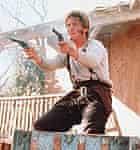
Young Guns tells the story of Billy the Kid and the Lincoln County War of New Mexico in the 1870’s.

Some hundred years and change later, Hollywood had fallen out of love with the Western. Action and adventure movies of that era typically saw the future cast of The Expendables carve their way through the enemy of the day (Russians, usually). As a fan of westerns, this cool reboot tickled my interest no end.

The golden age of Westerns entered my world via Saturday afternoon re-runs of John Wayne movies. On Saturday night, Bill Collins might show Shane or The Magnificent Seven, and my favourite Lewis and Martin films were the Westerns.

Notwithstanding, enjoyable as they were, these were not films of my generation.

The actors starring in Young Guns definitely lived smack bang in the sweet spot. Emilio Estevez, Lou Diamond Phillips, Charlie Sheen and Keifer Sutherland, arguably the hottest actors in Hollywood at that time. Sheen had just starred in Wall Street and Platoon, Sutherland was firing, Estevez a founding member of the Brat Pack.

As the film opens we find Billy the Kid aimless and lost until local trader, John Tunstall (Terrence Stamp) offers him righteous work and a place among his Regulators. John is a man who believes the power of redemption via clean living, good manners and honest toil, offering a second chance to wayward young blokes by way of serving as ranch hands and, well, regulating stuff.

Back at the ranch we meet the rest of the crew around the dinner table. Dick (Charlie Sheen) is the serious and responsible leader of the group, an incredibly ironic role looking back now, who clashes with Billy from the get-go.

Billy’s character manifests that cocky little smart arse in the Stephen Milne mould, albeit one who shoots people like it isn’t even a thing. Doc Scurlock (Keifer Sutherland) is the sensitive, bookish, poetic type, Jose Chavez (Lou Diamond Phillips) a half Mexican Indian with a disturbing proficiency for knife play.

Rounding out the table is Dirty Steve (Dermott Mulroney), a man untouched by modern dentistry or hygiene, and the nervous and more than a little wet Charlie (Casey Siemasko).

As they eat, and chat, you see that this intervention program for at-risk youth is successfully straightening out these rascally scamps.

The complication is that Tunstall is a business rival of a corrupt and evil cattle merchant called Murphy (Jack Palance). Deciding that Lincoln is not big enough for the two of them, he arranges to have Tunstall murdered on his way into town.

To say this unleashes a series of events that impact the quality of life of many people in Lincoln is an understatement. The Regulators get deputised to go after the men who killed Tunstall, though it emerges quickly that ‘justice’ for Billy could easily be substituted for the word ‘shoot.’

This heavy handed execution of warrants, and cowboys, means the authorities come after them and the Regulators flee to the wilderness.

While holed up at an isolated ranch, they are tracked down by Buckshot Bill Roberts (Brian Keith, he of Hardcastle and McCormick) who takes refuge in a toilet and shoots Dick and Doc, freeing Charlie Sheen up to work on other films and get to ‘winning’.

With the death of Dick, Billy takes charge and leads the boys on a mission to escape the army of bounty hunters and plethora of posses searching for them. Inevitably, they end up surrounded with no method escape. As you do, they seek guidance from the spirit world.

Chavez collects peyote and they get all hallucinogenic.  It made a mark on me because it was the first time I had seen blokes trying to solve a problem by getting wasted.

The tripping scene reveals something about each character, amplifying their personalities. Billy laughs maniacally, Doc composes poetry, Charlie engages in a turbo spew and Dirty Steve delivers a favourite line of the film when he yells ‘Did you see the size of that chicken?’

Chavez, having moved assuredly through the spirit world, discovers the answer and they head off to expected safety.

Unfortunately, legendary bounty hunter John Kinney (we know he is famous because his name forms most of Charlie’s dialogue for the remainder of the film) locates the lads and they are forced to escape via a thorny forest.

Then comes a seminal scene in the film. While discussing the merits of fighting on, Billy makes a speech about your pals, and how having good pals was the most important thing in the world.

That made an impact on a lad heading into puberty and beyond, and there was synergy with the way I felt about friendship against adversity. Billy also ignored the odds against them to remain singularly focussed on their goal of bringing Murphy to task. At twelve, this was attractive too, despite the sociopathic and criminal undertones.

In Mexico, word arrives that a great friend of Tunstall’s and the Regulators will be murdered in his home by Murphy men. The man who delivers this news is Pat Garrett, offering both the worst acting performance of the film and a real sense of foreshadowing the sequel. With a now famous call of ‘Regulators, Let’s ride!’ the gang head back to Lincoln to save the day.

Alas, it is all a trap and the house is surrounded by the factions out to get them. In keeping with the tradition of action films of the 1980’s, none of the thousands of bullets fired into the timber house hit anyone, defying laws of physics and the overall concept of heavy firepower.

Of course in rewatching you must suspend disbelief. It is no great achievement to look back at films you enjoyed and note all the things now implausible. My twelve-year-old self did not give a toss – he just wanted them to get away.

Billy reveals his smart arse personality once again, inflaming the situation by light-heartedly shooting a man in the forehead as punchline to a sight gag. The situation remains in standoff even when the US Cavalry arrives to ‘observe’ proceedings. Over the course of the siege, a lot of character development reaches a natural conclusion. When Chavez appears to run away, Dirty Steve unleashes his inner racist and suggests Chavez made love to horses.

Murphy arrives and begins a series of one-armed push-ups while instructing his men to end the siege. That is how I remember it, anyway. inevitably, to break the deadlock, they set fire to the property.

The remaining Regulators begin throwing material out of the house, perhaps under the mistaken belief it was a balloon that might float away. In slow motion, a chest tumbles from a window. When it hits the ground, Billy emerges and begins shooting with suddenly amazing accuracy.

Doc, Dirty Steve and Charlie burst out of a door and make their way out, firing from the hip like blokes born to shoot in slow motion.

With a yelp, Chavez returns with a string of horses to aid their getaway, redeeming himself in the eyes of Steve and manifesting the importance of having ‘pals’. Charlie dies after killing John Kinney, Steve buys it after helping Chavez onto a horse, while Doc and Billy leap the barricade and escape town.

Or do they? As Murphy stands in the street, declaring his dissatisfaction with the outcome to the sky, Billy returns and nails him right between the eyes with a six shooter boasting the ballistic capabilities of a high-end sniper rifle.

In the voiceover, Doc Spurlock reveals the denouement. Billy was later hunted down and killed by Pat Garrett, and buried next to Charlie. Doc escaped to New York, while Chavez went to California for a quieter life. Much later, someone crept into the graveyard and inscribed the word ‘Pals’ on his gravestone.

Young Guns moved me on many fronts. It combined the little known genre of Western movies and cock rock music with plenty of gunplay. The character of Billy was appealing in its chaos, much like the Joker offered up by Heath Ledger many years later. There were hidden themes of the importance of standing up to bullies and also staying loyal to your friends.

All these things spoke to me.

But it was the uneasy alliance between Regulators that appealed most. They were a diverse bunch prepared to unite behind a common cause to achieve something. A worthy message.

But seriously, did you see the size of that chicken?

The Jigsaw Analogy for Learning

With screen time at a premium, many isolated folk are turning to analogue games and puzzles for whiling time.

In this spirit, Sunday afternoon saw my much better half break out an old jigsaw puzzle. It covered the table with haystacks of colour, promising the fruity mise en scene of a greengrocer stall.

One corner of the box had been nibbled by a naughty puppy some years ago, a crime undiscovered and unremembered.

Undeterred and risking futile pursuit, unwilling to account for all one thousand pieces, we launched into the fray. Sometimes knowing the ending prevents beginning.

Five days later, the image was complete. Well, almost complete – two pieces we assume were destroyed by the aforementioned pooch and one was retrieved, half chewed, some time on the morning of the third day.

There was no small sense of achievement and pride as we celebrated the finish. So much so, it rested on the table for most of the afternoon.

A mandala we were reluctant to destroy.

The thing is, the effort of completion felt akin to the effort of mastery or learning anything.

This is where the jigsaw analogy for learning emerged.

The success criteria were right there on the front of the box – aside from the nibbled corner which became a mythical, unmapped section of mixed fruit until near the very end.

The entire image displayed a typical market fruit stall. Boxes lay side by side in rows, bursting with varied shade and colour. Bunches of bananas were placed around like red herring, and there were two boxes of maddening kiwifruit. A few boxes shared an orange yellow similarity – peaches, nectarines, apples. So familiar, yet so challenging.

The initial strategy involved finding the edges and making a frame, interspersed with wild matching and turning pieces madly, comparing shades of colour in a frenzy of deductive trial and error.

The week progressed with frequent periods of deep focus and flow. There were times of desperation, fatigue, hope, mania and false confidence. There were minor victories with the plums and endless frustration with aged grapes and peaches.

It took an entire day to solve the banana issue, while apples and pears of every shade and hue kept us working late into the evening.

Over the last two days we declared it would finish that day, only to be defeated by the size of the task. By then, eyes for colour were finely calibrated.

Jigsaw edges and images of fruit invaded our dreams.

Sometimes we found matches elusive no matter how hard we looked. The addictive mantra of ‘just one piece’ rang out across the kitchen table.

Fed up, exhausted, we’d retreat into other chores and entertainments.

Often as not, a return to the table would see a rat-a-tat-tat series of matches – eyes and fingers blessed by almost divine power.

As the end neared, industrial efficiency blessed our endeavours. We sat like indentured workers, brows furrowed with the determination to finish so we could eat dinner at the table again, or at least clear pet hair and dust from underneath.

Grim satisfaction ruled our faces as the number of unclaimed pieces dwindled and the blank spaces shrank. One box of kiwifruit became complete, then a box of apples. The peaches gave up their defiant struggle. The finish line drifted into view.

Mastery of the puzzle, or as near to mastery as a nibbly puppy allowed, provided a sense of quiet triumph and achievement.

Many times over five days did the analogous relationship between completing a jigsaw puzzle and learning anything at all cross my mind.

For within that five day journey, so many learning strategies and dispositions became visible.

Trial and error. Hypothesis. Failure. Persistence. Comparison and Contrast. Memory. Making connections. Triumph. False peaks. Disappointment. Self assessment. Peer assessment. Flow. Distraction. Pride. Satisfaction. Wishing pieces fit even when they didn’t. Thinking about making them fit anyway we could.

We had success criteria – the image on the box, and a learning intention, to avoid the despair of living a life of isolation in front of a screen. The challenge was hard enough to keep us engaged, without being impossible. Little wins along the way kept us motivated to finish, complimented by stubborn resolve.

Look, this analogy needs refinement for sure, but there is enough to begin with. Maybe it is a box full of interconnected pieces, mixed up on the table, but it offers somewhere to begin.

Europe Divided into its Kingdoms (1766) by John Spilsbury

And perhaps that is what John Spilsbury, credited for making jigsaw puzzles a thing around 1760, intended. His puzzle, ‘Europe divided into its kingdoms’ (1766) is believed to be the first purpose built jigsaw ever produced for sale. According to Wikipedia, whose emblem is coincidentally an incomplete globe constructed of jigsaw pieces, Spilsbury created puzzles for educational purposes, calling them ‘dissected maps’.

Perhaps then, rather than view learning and progress as linear process, sequential and predictable, the analogy of the jigsaw offers a better one.

Next week, a canal scene provides another opportunity for exploring the analogy.

Vulnerable is the New Black

I don’t want to talk about the ‘Rona. I have drunk my fill.

Vulnerability on the other hand? Well, vulnerability is the new black. If you aren’t feeling vulnerable some of the time then you might want to check your vitals and admit you are a sociopath.

Of course, vulnerability is not a stranger to the human condition. This is not even up for debate, but one cannot deny that it has been a VERY long time since the entire planet felt so vulnerable and uncertain.

Pockets of the world could offer exception, but perhaps not since the rise of terror, post 9/11, has it spread so widely. That is a debate for the geopolitical nerds and assorted intellectuals, however.

The vulnerability I want to explore is the good kind related to learning and growth. As in, what might be the exponential benefit when we emerge from lockdown?

As the tide of regular social interaction recedes, and we’ve adjusted and adapted as best as we could, this has been on my mind.

For a huge stretch of my life, vulnerability was a fragrance made by Calvin Kline. It was kryptonite, something to avoid if you wished to be taken seriously by people who mattered.

Real men were never wrong. Real men, people of substance and intellect, never showed a weakness like vulnerability.

Okay, maybe when they were drunk.

Thankfully, that attitude left some years ago. As a learner and teacher, sporadic aspiring writer, this ghost in the machine had long outstayed its welcome.

Now, vulnerability is almost a superpower. And it has led me to entering this forced period of isolation with a sense of purpose and even, it could be said, excitement.

This transition was helped no end by an openness to return to something very old, even ancient. Philosophy.

And the further I have journeyed down the path of philosophical learning, the more vulnerability became an essential part of growth and learning. It has given me the humility to admit that I don’t know everything.

It turns out, you can be strong and vulnerable at the same time.

The trip down this rabbit hole started with Tim Ferriss and his podcasts, which I enjoyed more for who he spoke to than the man himself.

And one theme that arose time and time again via these chats was the wisdom of ancients, particularly the stoic flavour.

This was a sceptical, toe in the water kind of study. I did not want to jump in to a cult, wary of being sucked into a closed shop where magical answers lie like gold at the end of a rainbow.

That scepticism remains – but as I read more and way led on to way, it brought me through history to some other great thinkers and philosophers on life, including a return to Viktor Frankl and his terrific ‘Man’s Search for Meaning’.

Ryan Holiday was a worthy guide via his series of books related to the stoics. Asking around, mindful not to put too many eggs in one basked, the journey led to Alain de Botton’s excellent ‘The Consolations of Philosophy’ also.

For a good little primer on one of the stoics and anxiety, you can’t go past Maria Popova’s article on Brainpickings too.

Exposure to and the rumination of these principles offered tools to enter this phase of uncertainty with some perspective and resolve.

Rather than see doom and gloom in the global pandemic and uncertain forced isolation, I’m looking for the good things.

While stoicism is not the magic bullet – in fact, some of the views in this philosophy are colder than a polar bear’s pocket, there is clear advantage in choosing how you will respond to something, knowing that vulnerability is not only desirable, but completely required and normal.

So the interesting question is, what will we all do with this forced vulnerability and risk? How de cope with social distancing, social isolation and lockdown?

Early signs indicate an increase in general horseplay and making the best of a bad one. Balcony bands, Tik Toks, group whisky and wine evenings and a whole lot of getting on with it. Innovation, ingenuity and fun in other words.

And these are important ways for us to cope and ensure the collective withdrawal from what we knew. How long will they sustain us, though, when the weeks become months?

The exploration of stoicism has given me the chance to look at things a bit differently before taking action. Rather than vanish into navel gazing, itemising and quantifying all the things I can’t do, the focus is looking for the things that can be done.

Ryan Holiday often refers to an idea borrowed from Robert Greene – is it alive time or dead time?

The answer to this question requires more vulnerability than a system may tolerate, particularly now, but it is also critical to how we approach this circumstance.

Are we able to see isolation as an opportunity to create more alive time than we have ever had? Or will it be dead time? The ‘tooth that nibbles at the edges of our souls’, to steal a line from Emily Dickinson.

Not so long ago, my desires were for more time to work on the things I really cared about. Learning, Educating. Writing.

I wanted more time to cook and share meals with my much better half. I wanted more time to exercise and build good habits. I wanted more time to connect with friends and family. I wanted to get more sleep and reduce screen time and sell less of myself to the busy monster, whose appetites were voracious and vast.

Vulnerability offered the chance to realise that what I wanted is what the pandemic has, indirectly, provided.

The journey towards this vulnerability, guided by ancient voices and ideas, allows me to enter this time with more hope than fear.

Vulnerable is the new black. Suit up.

A Role Model for the Confined: Count Rostov Lights the Way

One perk of interviewing English teachers is asking this bog standard question:

So, what are you reading at the moment?

Bored with the responses, a couple of years ago I began asking what they would recommend the most, or had gifted the most, to others. (tip of the hat to Tim Ferriss here).

This question has led to some great discoveries, none more so than a book so perfect for the time, it is frightening.

Over summer, Amor Towles’ A Gentleman in Moscow captivated me, shooting to the apex of my absolute favourite reads and recommendations.

Now, in the light of our global forced isolation, it feels like a book written exactly for the times.

Beyond this – we NEED to read this book.

For in Count Alexander Ilyich Rostov, ‘recipient of the Order of St Andrew, Member of the Jockey Club, Master of the Hunt’, we may find no greater role model for enduring forced seclusion.

As punishment for being declared an ‘unrepentant aristocrat’, Rostov is confined to house arrest in the elegant Hotel Metropol, Moscow. Understanding that leaving the hotel will result in certain death at the hands of the Soviet regime, The Count lives out the next 32 years in the attic room set aside for him by management.

To say he is charming is an understatement, and for this alone this novel is a worthy read. Witty, erudite and engaging, he is masterfully constructed by Towles.

More importantly, he is a man who refuses to give in to the slings and arrows flung at him by fortune. Over the length of house arrest, every semblance of who he was before the revolution is attacked in some way by fate and circumstance.

Rostov is confronted with problem after problem and tackles each one with the assured confidence of someone who finds the best in each dire circumstance. Even when low, he finds ways to let light guide him.

As time passes, Rostov is forced to use every ounce of ingenuity and guile to overcome greater and greater challenges as his very identity as a gentleman and core values are frequently attacked.

Yet he barely wavers. Moreover, he finds a way to put others first and live his values, even under the greatest strain. He loves and is loved against a backdrop of turmoil and confinement.

As life in Soviet Russia continues to insist he shed the gentlemanly aspects of his nature, he holds the line. Rostov keeps himself from the darkness by taking joy in simple pleasures. Each time he might give in to melancholy, or feel sorry for himself, he chooses another way.

Which is the very joy in reading this novel. As we find our lives temporarily reduced and affected, confined to out homes, there seems great solace in knowing his example is there waiting for us.

As James Clear says in his excellent Atomic Habits, every action we take is a vote for the kind of person we want to be.

Taking this further, in a world full of chaos and uncertainty. Rostov’s belief that ‘By the smallest of one’s actions, one can restore some sense of order to the world’, might act as a tiny part of the road map for negotiating this time, unheralded.

This novel will make you feel good about all kinds of things, which is why I can’t recommend it highly enough.

Order it, read it, explore and share the joy.