“We shall never have more time. We have, and have always had, all the time there is.”
Arnold Bennett
We are in that season of last things, those of us on the last days of a holiday break. This probably means looking at the things not ticked off the list, or rumination over the broken promises, or renegotiating new ones.
Thoughts turn to what Monday will be like, bleary eyed and shocked at the shift in routine, perhaps a touch miffed that daylight savings just started and you lost a precious hour of sleep when you needed it most.
There is also a slight sense of mourning about the shrinking of your own time and the handing over to the profession we chose, this inherent act of service, and all the demands and implications of this choice.
Strive is a word which pops up too, a short, punchy verb with complex implications. The Oxford dictionary defines it as making ‘ great efforts to achieve or obtain something’ and to ‘struggle or fight vigorously’.
The Cambridge dictionary says it is ‘to try very hard to do something or to make something happen, especially for a long time against difficulties’.
Well, this would be a word which comes to mind as we confront a new term, for it is at the core of what we do as teachers in schools, isn’t it?
It follows that the other thought, that of living on 24 hours a day, also comes to mind as we embark on that plate spinning, dynamic and hectic cycle of prioritising and slicing our attention into the requisite parts to get it all done. Wouldn’t another hour each day work wonders in keeping on top of all those hands in our pockets?
As a reminder that this is not a new problem, or limited in any way to teaching, Arnold Bennett wrote a book about this in 1910, a kind of proto-self help book way ahead of its time, titled ‘How to Live on 24 Hours a Day’, which if nothing else reveals how little things change, no matter how much things change.
While the dated turns of phrase and gendered language and assumptions stand out like the proverbial, the message remains the same and aligns well with the concerns of those who battle this paradox: How do we manage time and effort while also seeking growth and improvement?
For this is the essence of striving – working over a long time to get better. It is the fuel for progress, achievement and satisfaction as long as it doesn’t fly out of control.
Bennett calls this the ‘desire to exceed one’s programme’ and if this is not striving, then I can’t read English.
However we square this circle, so to speak, it is worth reminding ourselves that there is no magic pudding of more time and indeed, we have what we have, for now.
Good luck to all you strivers – it matters if we are to honour the gift.
Twenty five odd years in this game has exposed me to educators who put caveats on all sorts of things along a wide continuum from reasonable and sensible to bizarre.
They are always clear about what they will and will not do and this clarity naturally sharpens, stiffens and embeds more as careers progress.
“I don’t teach grade prep. I don’t teach year seven. I only teach senior students, so don’t waste my time on the weaker, younger, less needy and developed.”
Setting boundaries and seeking the comfort of homeostasis is a very human and understandable trait.
At the chalkface, these choices and declarations are often linked with professional identities connected to specialisation and experience.
As we attain career capital through this experience, our achievements or titled progression, we have more choice about what up with we will not put.
In addition, this professional identity and status is entwined with the heirarchy myth that teacher capacity or excellence is linked somehow to how far up the year levels you go, or the age of students under your tutelage and in your care.
The flawed reasoning here asserts that final or senior year teachers are somehow superior to those who work with younger students, no doubt because the concepts are harder and the stakes higher in a school system obsessed with ranking and sorting students in readiness for life after school.
This can lead to a belief that we should feel somehow inferior for not being satisfied with where we are, particularly lower down, or that somehow our work is less impactful or important.
Well, after teaching senior classes for several years in Australia and abroad, I chose to stay in middle school, aka puberty management, or the valley of the shadow of teenage angst.
Because it is hard and not easy.
Because it can be unpredictable.
Because students are often angry, combative, sullen, inconstant and unregulated; they especially need good guides for the journey.
Because there are a lot of challenges, aside from the biological drivers, to work through or go around, over or under.
Arguably, there is no more critical period of education (defining middle school here as roughly 12 to 16 years old) due to the varied rate and timing of change within a cohort.
We meet our students at the heady transition from primary school children into high school and across four years, nurture, support and help them, often against their wishes, to become young people on the verge of high stakes education or transition into the workforce.
Some students experience only mild disruption and shockwaves in puberty, while others journey deep, deep into the valley of darkness.
A lot of people ask why I do it, and have always declared they couldn’t. For a long time I didn’t know why, but felt the curiosity and even disdain of people for my desire to not covet the teaching of older students.
Collingwood Football Club coach, Craig McRae, recently said in a press conference when asked about a player with a troubled past who had shown signs of maturing and improvement, most obviously on field but also off, the following:
“”We all grow up, don’t we?” McRae said.
“I’m 50 today, I’m getting a bit old, he’s 26 or something, he’s growing. Some take a little bit longer to find who they are, we’re really proud of his journey [and] his growth, we all want to keep growing.
People don’t like change. ‘Oh you need to change’, no one likes to change, but people like to grow, people want to grow, so we’ll continue to use that language around our environment; let’s just get better.
Craig McRae after 2023 Preliminary Final
Maybe I was misty eyed and glowing as a Pies fan, but it smacked of being a profound message we could apply to the reasons we stay and work with teenagers, and meet them at their most difficult.
I choose to stay because teenagers need good people with them, as do their parents, who need as much support sometimes to know it is normal and going to work out one day.
Teenagers need experts who understand and remember what it feels like to be deep in the soup. They need people who don’t just know, but understand. They need safe, reliable, trustworthy and consistent people, not friends or mavens of popular and cool.
I choose to stay because teenagers need excellent teachers committed to seeking excellence, not just survival, and certainly not those seeking status or glory.
This is a double edged commitment. One the one hand, it is a high cost decision where one accepts the frustrations and realities of the journey, yet there is also the often long delayed reward of seeing students come out the other side, or even get small wins and have their best selves emerge from the rock. Sometimes there is nothing but the hope it all worked out.
It is a real challenge – personally as much as professionally, as one chooses to work where the tension and volatility are highest, while the perceived glories of teaching senior students are low, along with intrinsic motivation and attention that one might expect with older, more settled and calmer brains.
I also choose to stay because they need people who won’t let them off the hook.
They need people who know that the only real way to build resilience and character is by enduring, doing and living through hard things, or that growth is messy, inconsistent and far from guaranteed, and that they will most likely be okay.
They need people who will be there when they need, not just in spite of the challenge, but because of they inherent challenge.
When James Carville said these words, he could not know his comment would go old school viral at the time or even echo in popular consciousness some thirty years later. Back then, his intention was to define and outline priorities during an election campaign, where any number of contested issues arise for debate and exploration in the hope of plotting a way ahead.
With a minor adjustment, these words apply equally well to education. While lacking such election cycle drivers to raise topics, issues and debates, we still wrestle with inherent tensions within discussions, arguments and debates about where we are, why we are and where we should go next when educating students.
Right now, one can point to issues in education globally and specifically in Australia. The trifecta of wars – reading, culture, curriculum; diversity in schools, technology in schools, the rise in student anxiety and depression, student behaviour, NAPLAN…
The long term decline in Australia’s performance in international benchmark tests like PISA and TIMSS has also long been a discussion point, so much so that the Australian Federal Senate launched an inquiry into this very issue and framed terms of reference to explore possible factors influencing this decline.
Behaviour in schools has become a prominent issue since the pandemic. The associated disruption and fragmentation of learning during this time and its wider implications is still working itself out, which may very well prove a net good as it offers an opportunity to challenge old scripts and update our thinking.
Yet, the most pressing issue amongst teachers, in my experience, is workload.
Which is very much the story of the modern world, isn’t it? We have reached a point where issues surrounding work, productivity and finding a reasonable balance are very much on the minds and lips of workers across many industries, particularly ‘knowledge’ workers.
Mid 2021, fresh out of 14 day isolation as a potential close COVID contact and on the cusp of another lockdown, which would prove the longest one, I reached a state I had never experienced before and really struggled to make sense of. In the end, after asking for help and support, it emerged that I had burned out.
With time and space to reflect, one understands why burnout found me at that time, but the pandemic cannot really explain how there was an overwhelming sense that this had been coming for a long time and in was in no small way related to the way I worked and, if something did not change, it would not end well.
“Work is what horses die of. Everybody should know that.”
Stark Russian sentiment aside, it seems useful at this point to divide the concept of work from that of workload, as they aren’t really the same thing.
Any conversation about ‘work’ is actually a pretty universal discussion about desire, requirement and fit. It is in essence, the ‘what’.
Workload is a very different beast, relating to the dosage, or how much is reasonable before you begin diluting quality or, in the worst cases, endanger the practitioner.
Experience tells me that the largest factor in this issue of teacher workload is driven by the growing negative ratio of actual teaching or teaching related activities compared to administrative, compliance or operational tasks.
It is also the consequential mission creep at the heart of our well-intentioned desire to do everything, all at once. Often, in the best case, it means making a millimetre progress in a thousand different directions. In the worst case, it means poor teacher morale, retention and a lack of good will, the invisible force that fuels any great school.
This brings us to the concept of shadow work, outlined in the 2015 book Shadow Work: The Unpaid, Unseen Jobs That Fill Your Day, by former Harvard magazine editor Craig Lambert, who spoke of the ‘many tasks that used to be done by other people, which most of us now do for ourselves, usually with the help of digital devices. This includes everything from banking to travel bookings, ordering food in restaurants to bagging groceries, not to mention downloading and navigating the apps we need to pay parking tickets or track our children’s school assignments or even troubleshoot our own tech problems’.
This ‘shadow work’ not only impacts the real world (where teachers don’t live, of course) but … but goes a good way to explaining the additional workload pressure of the things we do in schools, especially with the help of technology.
All of it is good and worthy in principle – differentiated learning, feedback, continuous reporting, parent communications, assessment, meetings, curriculum planning, curriculum review, external testing, student tracking, data collection and analysis, clubs, fundraisers, excursions, professional learning, professional registration compliance, and so on, and so on, and so on…
When added to the core business of teaching classes and supervising students, The gradual increase in working hours, especially since we now have the ability to be connected all the time, looks more taxing and burdensome with each passing term.
It means teachers can’t easily vanish into leisure time without guilt or workplace norms tempting us to check in with email or other connection tools, like MS teams or Slack, just in case.
It is a tricky problem, but one solution may come from the French, often at the pointy end of the spear with setting boundaries on work, who somewhat recently went to court to enshrine in law their right to disconnect when outside nominated work hours, something Australian unions are now advocating for.
If we are being completely honest, there are very few issues that happen out of hours in schools that could not be dealt with the next morning, but it is not that easy, since many schools fall into the very human trap of romanticising the urgent and important, which Dwight Eisenhower defined in 1954 .
To add a layer of complexity to this already wicked conversation, there is also the inherent truth that many teachers enjoy the dynamic complexity of the profession we have chosen.
Tom Bennett, in his book Running the Room, a treatise on behaviour in schools, actually captured the complexity of teaching exceptionally well.
“Teaching is a testing profession, and its demands can break you, especially if you care about doing it well. It is a job based on repetition, the metronomes of the timetable, the curriculum and the tidal rhythm of the school year breathing in and out; but also one that surprises you everyday. It offers you a front-row seat to the wonders of human imagination, while exposing you to every act of petty malice you can imagine. It is a thankless task and a cornucopia of eternal reward.” (p.341)
I like this because it captures the paradoxes and competing tensions in this job that many teachers find alluring, albeit frustrating. The work is seasonal and predictable, no doubt, but also wicked and dynamic. The line I like most in his definition is ‘especially if you care about doing it well’.
This is where the true professionals live. This is where you find people who are perhaps committed to a calling much more than a job. Schools are broad churches accommodating both the involved and the committed – which reminds one of that old joke about bacon and eggs. The chicken is involved, but the pig is committed…
Yet we should not kid ourselves about the reality that this commitment is under real threat from workload pressures that are within our control to address. It is not just a threat to the chickens, but also the pigs, as the ledger tilts towards many teachers not seeing a long term future in continuing this important work.
Yes, the short term may show a settling or a return to something like normal as we move further away from the pandemic.
Yet workload is still a huge issue for the long term, because it has a very real impact on both the ability to attract quality teachers and also grow and retain them. It is an issue for schools because they rely on and survive based mainly on those who do it for intrinsic reward, not financial gain.
The work of teaching is not the issue, but the amount of it, which seems to grow and renew like a magic pudding or Prometheus’ liver, meaning the seasons of rest and renewal are not sufficient to head back into the fray and do what we do best.
In the end, if we cannot confront this uncomfortable truth and restore balance to workloads by taking things off plates, by defining what is really important, then everybody loses.
In 2016, educational author and academic Robert Pondiscio declared that ‘90% of English teachers found their lesson content by googling – sometimes desperately – the night before.’
This struck a chord. At times, I’ve been this teacher and many fellow practitioners can no doubt identify. While we’re at it, we should acknowledge that the reference to the night before is mostly true – sometimes this desperate search comes just before class in that well-known five step lesson plan (the last five steps before entering the classroom). More truthfully, it even happens during the lesson sometimes.
In and of itself, leaning on teaching materials found on the web is not all bad. Sometimes it is the only option.
Reality aside, when we live this hand to mouth existence for long enough, an uncomfortable truth emerges.
Many online resources are just like the temporary energy spike from a naughty treat. We feel the initial coursing high of excitement and energy, but also the inevitable crash later on.
This cycle, repeated day after day, week after week and term after term, becomes a hedonic treadmill of educational short cuts which erode the quality of teaching and learning – but not always in a positive way.
We’ve all known teachers who provide huge booklets designed for much older students to younger ones to ‘work their way through’. We know teachers who share hundreds of electronic files for students, (including complex whole units of work) ripped from websites with barely a cursory scan of the content to see if it resides in the same ballpark as their own context or learning intentions.
We all know teachers who boast about the ease and value of these resources and how it saves so much time for the them.
I want to believe, and mostly do believe, that teachers who do this have student interest at their core, but something else tells me it is often more about convenience, assurance and efficiency for them.
While you may question the accuracy of that finding by Pondiscio, there is no doubt an inherent truth inside.
Supporting evidence exists in photocopy rooms, student folders and document trays around the globe.
So why do we do it?
The motivation to seek and use online teaching resources seems as varied and diverse as our profession.
Sometimes it is about crowd control.
Most teachers have occasions when we need something to keep desperate, ratty students at bay. Any activity is good activity, and idle hands are the devil’s work.
In more compliant settings, where volume equals rigour, having a lot to do is a powerful classroom management strategy. These readymade lessons and materials act as a barricade for teachers to gain breathing space while students make their way through something that looks, at least from the outside, like good learning.
Busyness is a widespread proxy for productivity in the world, not just in education, but it is a bad one for deep learning. The belief that doing something is better than doing nothing doesn’t hold up if the students don’t understand why they are learning or what they are learning.
Another driving force is the eternal obstacle for teachers – time. People who work in schools know that the wide slabs of time that non-teachers envy and joke about are often filled with administrivia, compliance and other activities peripheral to teaching.
Teachers wear so many hats in a day we become virtual hat stands; wandering classrooms and hallways as first responders, counsellors and troubleshooters. We are sounding boards, socialisers and and arbiters of proper behaviour. We rack up difficult conversations like influencers rack up likes on social media.
Cram and wedge assessment, differentiation and actual teaching into what is left of most days, little time remains to create and shape the resources we use to bridge the gap between learner and learning. There is only so much time to spend on satisfying the hungry mouths of responsibility, duty and compliance.
Of course, there are other factors at play, leading us to seek the quick fix wisdom of the crowd because maybe we don’t believe we know enough or have enough experience. This is, in one sense, buying fish rather than learning how to cast a line.
When you get down to it, another powerful motivation for googling online materials is about travelling the path of least resistance, which is very human. Why make it harder on yourself than you need to?
Adding in the usual human responsibilities and demands of life, it is easy to understand the attraction of the quick and easy hit of online resources. Reducing drag by finding paths of least resistance is sometimes all we can do to get through a day or week.
As real as these factors are in driving teachers to use online resources, we must not lose sight of the real goal – to maximise student learning with quality instruction and materials that help them move ahead.
We must resist the temptation of choosing easy over good. We must choose courage and professionalism over comfort. We must demand more of the materials we use to bring learning to our classrooms.
Making time to develop high quality materials for our contexts should be a priority in any school. They are the bedrock of student learning and growth, so making time for it and taking things off teacher plates must be a priority of leadership in schools.
Each new year arrives accompanied by fireworks, resolutions and sore heads. For many of us, the turning of a year inspires a turning inward. We embrace the opportunity to renew, take stock and course correct amidst the promise of a blank slate and fresh start.
This usually doesn’t last long, as the existence of ‘Quitters Day’ attests (The first Friday in January, in case you were wondering). Now, I am not a fan of resolutions and promise never to be one, though this year, for the second time, I set a personal challenge to help me wind down and renew.
This challenge was a digital detox – foregoing the digital realm in all forms for 24 hours. No phone, no TV, no laptop or Ipad. No headphones. Nada. Zip. Nothing.
The end of 2021, just days into the summer break, found me struggling to switch off despite the abundance of time and opportunity. The usual ‘I should be doing something’ agitation lingered longer than ever once the academic year ended and the days emptied.
I felt exhausted, restless and cagey. Time was short and I could not get around and do everything I wanted, or thought I wanted, to do. Which is ridiculous, considering the good fortune of long breaks we teachers enjoy.
In response, principles of self care led me to a natural accounting for and reflection on habits and routines. This included exploring my digital life (not wishing to point fingers…ah, thank you…)
The pandemic has forced many of us into a huge shift in habits and routines.
The science of habit is fascinating. How we humans acquire, adapt and lose them, and how this shapes our lives is an area of great interest to many.
Not all habits were created equal. In particular, the speed of our adoption and reliance on phones and tablets is an important topic for me not just an educator, but also as a functioning, sentient human being.
The cognitive pressure that phones and social media place on us is also an increasing area of human concern.
Smartphones, true weapons of mass distraction, are central and ubiquitous for many in our hyper-connected modern life.
Worryingly, films like ‘The Social Dilemma’ have revealed the extent to which this distracting, addictive quality is intentionally built in by creators and designers.
Even if you do not subscribe to a cynical, black hat view that ‘we’re all being manipulated’ by technology, it is not a huge stretch to argue that the development of smartphone technology and the rise of social media draws obvious parallels with that story where Pandora opens a certain box…
There is genuine concern and deep inquiry into the cognitive pressure that smartphones, social media and what Cal Newport calls ‘network tools’ (email, instant messenger, online gaming, video calls etc.) brings to bear on individuals and society as a whole.
Scientists and psychologists are taking a keen interest in this phenomenon and its impact and consequences.
Beyond this, anyone who has or works with children and teenagers can attest to the growing suspicion that technology and social media, not to mention gaming, may not be beneficial or benign for their physical, emotional and mental wellbeing.
Speculating further, the apparent crisis in mental health in society, manifested in increased rates of anxiety, social fear and depression, may have a strong correlation with this rapid and pervasive shift to habitual technology use and dependence.
There is no doubt that life is fundamentally different from not so long ago.
‘Okay, Boomer!’ I hear you say.
Well, it is worth reflecting on how despite the lengthy existence of technologies like television and telephones (all demonised and criticised at times for the damage they cause) with modern hyper-connectivity is not really a comparison of apples and apples.
Granted, in days of yore there was a lot of staring into the ‘idiot box’ or listening to ‘rowdy music’. Yet is hard to argue that we were then so consistently connected from the time we woke to the time we went to sleep, or so readily able to access perennial sources of stimulation outside our own minds and bodies.
Going further, if we apply principles of neuroplasticity and lessons from research in the fields of cognitive and neuroscience, it is reasonable to assert that our interaction with and usage of these devices is changing our brains.
Granted, the extent and impact of this might be overstated, but we can say that our habits and routines have fundamentally changed through the constant availability of electronic devices and tools over the last twenty years or so.
So what is the problem, then?
To my way of thinking, for thousands of years, human beings have understood that there is a lot to be said for the benefits of stillness, reflection and downtime in a life.
We know it, too, judging by the ever expanding mindfulness and meditation industry.
The numbers don’t lie. In the US alone it is believed to be worth 1 billion dollars a year. By 2023 it is projected to be worth 3.9 billion and a whopping 9 billion by 2027.
No doubt, the pandemic has pushed this along, but even considering this, the exponential jump in people searching for solace and calm in meditation and mindfulness is extraordinary.
Yet, the reality is that you never need to have downtime if you don’t want it. There is always a magic tool close to hand for finding out or engaging in anything.
Connected screens, whatever your preference, are a magic portal; a black hole of endless rabbit warrens to disappear into at will, as long as your phone is charged and you have Internet access.
Quiet, reflective moments at a bus stop or on the train are rare and perhaps, sadly, extinct. There are no more thoughtful or pensive pauses during long conversations, or quiet contemplation on first waking or when a dinner buddy heads off to the loo. Hell – there is no more quiet contemplation on the loo if you don’t wish it.
Yuck.
This year, after another year of building and reinforcing different habits during lockdown and isolation, I’d added more scrolling, refreshing and clickbait news to my mental diet.
These ‘digital snacks’ became even more disruptive and time consuming events in my day.
Part challenge, part experiment, part just something to do, after another annus interruptus, I was interested to see if my taking a break might settle an unquiet mind.
Another motivation was curiosity. I wanted to see how it felt to go back in time to visit an old self – one who reads a physical paper for news or goes outside for the weather report.
The movement
The concept of a digital detox is not new, but there is a growing global movement towards countering the negative aspects of technology use by taking regular breaks.
In Newport’s excellent book ‘Deep Work’, he recounts the story of journalist and early influencer, Baratunde Thurston, who wrote about his experience in giving up technology for an entire month back in 2013. It is a great read.
There are various methods and movements which involve taking regular breaks – from one day a week to one week a month to one month a year for the independently wealthy – from tech. Some are variously known as an Internet Sabbath, Technical Sabbath or Tech Shabat.
Like many diets and challenges, there are endless options, parameters and dosages to suit you. This continuum extends from minor to the extreme, escaping to an off-grid cabin in the woods model.
Regardless of the details, the common thread is the intentional disconnection or avoidance of technology and social media to benefit one’s mental and physical health or to improve productivity.
The What
Not considering myself a phone or social media addict, last year I thought the challenge would be easy; just power down the phone and put it in a drawer for 24 hours. No worries. A day later I’d be back, ready to see what I’d missed.
While the experience was not traumatic or onerous, I was surprised by how many times I caught myself thinking ‘I just need to…’, before realising I needed my phone to do it.
There were periods of withdrawal, but I made do with analogue conversations, books and games.
The discomfort was akin to a nasty vice, like smoking, requiring determined effort to avoid slipping and stay the course.
In the end I did not miss anything vital and in fact, the experience brought a sense of being more ‘there’ and less hurried.
One some levels, the 2022 challenge was fairly low impact and interesting in the same way.
I sometimes caught myself wanting to get my phone and check a little thing, or make a note, set a reminder, check WhatsApp just to see what was going on.
When I realised I could not due to self-imposed limitations, or that I’d have to wait, I experienced everything on a continuum from ‘Oh, that’s right!’ to ‘of course’, to ‘dang’ to ‘FFS’.
There was mild discomfort, maybe moving in the direction of anxiety or longing.
The challenge began easily enough. I powered down my phone and left it on a shelf upstairs. I rang my Mum to tell her I would be off the air and to contact my partner if there was anything urgent. That was the easy part.
There was a sense of missing something as I walked the dog instead of trawl news apps and social media feeds to see what had happened while I was sleeping.
Which is the thing, isn’t it? The world is always on duty and always turning, offering endless trails of trivia to consume and explore.
In the quiet, deep down, I recalled the old script about a good citizen being an informed citizen. Growing up, there was an avowed value, expectation, obligation to being a person who ‘kept up with things’.
What to do! What to do! If I wanted to know what kind of food a rutabaga was, I couldn’t check the google machine and simply wait, just like the old days… (in fact, later that day I asked my partner to look it up for me. Some things simply cannot wait. They are turnips, or swedes, by the way).
As the dog led me around the park, amid shimmering sunlight from the lake and the sound of birdsong, I wondered about how these old scripts still served us.
One other minor issue I found was, in an age when you need to check in everywhere for contact tracing, being sans phone left me somewhat restricted in terms of where I could go and what I could do.
Yet the day passed easily. Between bouts of analogue journaling and reading, a sense of less hurry and burden emerged.
Time did a funny thing. It embraced a slower cadence rather than leaching away into a raging stream of steady, inattentive activity.
There was enough time.
There was too much time.
In the later morning, I went to the garden and got to long-avoided weeding and watering.
I was suddenly awash with time; an unhurried master of my day once more.
There was time to chat, take reading snacks and at one stage I found myself in the study, sprawled on the floor, sorting through things left for years on the shelves and dusty to-do lists.
That said, there were times when I crashed up against the absence of my phone and felt pangs of longing.
Around midday, I worried that I would forget all the things I could suddenly think about. Free from regular checking in and scrolling, a quiet stillness emerged. Ideas shot across my mind like meteors.
So I got a pen and some paper.
There was room for losing oneself in thought, contemplation and discussion.
Those brief pauses and transitions in a day, when we habitually lift the phone to our faces and peer in, blank eyed, were now free for something like the natural renewal I remembered.
As afternoon turned to evening, I found myself hungry to complete tasks delayed and avoided – all the life administration left to rot in the too hard or onerous pile. In doing them, their reign on the shelves or mental to-do lists ended. They mocked and guilted me no longer.
This whole time, the phone sat inert upstairs on the mantle, powered down and out of mind.
I got a little antsy in the evening, where television is an easy companion. So I read a bit, chatted some more, then conceded to fatigue and called it a day.
This was something of a return to natural rhythm. The absence of electronic options meant the evening shutdown was not artificially delayed by the ‘just one more episode’ trap or the ‘I wonder what…’ forays down a compelling rabbit hole, or the lure of constant ‘shocking’ news, commentary and clickbait.
Without these self-sustaining attention wormholes, the rhythms and signals of the body and brain were not muffled and drowned.
Which is hugely beneficial, if only for a day.
The absence of these distractions swiftly – more swiftly than expected, echoed a time not so distant when we knew less connection and hurry and more restful sleep and leisure time.
It was brilliant.
That night, after climbing into bed a couple of hours earlier than usual and reading a few analogue chapters of an analogue book, I went to sleep suitably fatigued from a most productive and enjoyable day.
The next morning, when it was time to power up and see what I had missed, a strange sense of reluctance appeared. Nevertheless, curiosity aroused, I turned the phone on.
Touring through WhatsApp, messages, voicemails, emails, Twitter and Apple News revealed I had missed, well, not much. There was some minor banter and episodic planning and discussion about an upcoming lunch.
Twitter was at its snarling, snarky and smarmy best. The trivia and ego had flowed steadily through the previous day and night and my world was not changed at all by not being there to witness it.
Yet by lunchtime, normal service was restored, albeit with moments of mindful attention just before I held my thumb to the screen to swipe and refresh.
The lessons of this challenge were clear. There are obvious benefits to disconnecting, even for a day.
To me, this experience underlines that social media and technology are just tools and not the necessities we’ve made them. They are just things to help enhance a life and help make our best contribution, whatever that may be, rather than devote ourselves to.
One cannot renew, refresh or find stillness if the use of these ‘weapons of mass distraction’ are so habitual to be rendered unconscious.
The collateral damage of our addiction and reliance on these things, when we account for lost moments, minutes and hours, aggregates into a vast portion of our lives.
If you are searching for the source of that minor discomfort or agitation, or feeling that low sense of rut, or worried about time, then perhaps a digital detox is something to consider.
Like any possession or tool, it is worth taking time out to check in with where the control lies.
Reading is a human superpower, cheesy as that sounds. It allows us to travel across time and speak with the dead. It allows us to travel far and wide, building empathy via the written word, sparking and fuelling the fire of interest in the great human conversation.
Last year I wrote down some favourite reads of the year as a way of paying it forward. Many titles come to me via the recommendations of others and are a boon. Maybe you will find something great to read too.
In no particular order, I give you five fiction and five non-fiction titles that I enjoyed the most in 2021. There is also an educational book of the year for those of us at the chalkface.
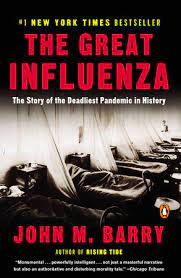
Topical, no? This book grabbed hold of me from from first to last. Partly, it is the fascinating story of the late nineteenth and early twentieth century shift in American medicine from gentlemanly pursuit to the more rigorous science and evidence-based approach we know and recognise. Following the paths of several men and women who pioneered this shift, it also reveals what happened when this expertise intersected with the Spanish Flu epidemic at the end of the First World War and beyond. The parallels to our experience over the last two years is haunting and humbling, especially if we subscribe to the flawed view that this is unprecedented in human history. It is also a frightening testimony to the ease at which history repeats. Published in 2005 and updated in 2012, it could not accurately foresee and the times that we know well, but it provides a hopeful tone for the way out.
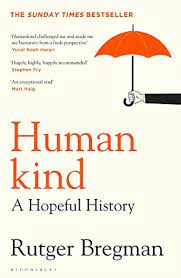
The premise of this book is the assertion that veneer theory, the widespread assumption or belief that humanity is only ever a short ride away from descending into chaos and brutal tribalism is not true. Indeed, Bregman’s message is that most people are actually good and provides plenty of evidence to support it, skewering some long held misunderstandings and beliefs along the way. This was a timely message in a year when optimism and hope were periodically in short supply. This enjoyable, thought-provoking book had me desperately making time to read more.
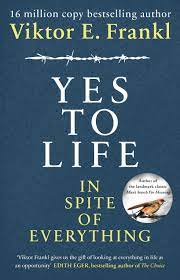
A new title from Viktor Frankl? How is that possible? Man’s Search for Meaning is one of my all time favourite books, making a ‘newly’ discovered title an exciting proposition. It is actually a collection of public lectures Frankl gave in Vienna during March and April of 1946. The tile, poignantly, is taken from the story of the Buchenwald camp song which prisoners were ordered to sing over and over at the end of long days of brutal work, punishment and starvation. Initially sung under sufferance, some lyrics inspired people to sing it quietly amongst themselves as an act of defiance and ray of hope. These lectures offer the broad strokes that would become the latter best selling book and inform Frankl’s guiding concern as a psychiatrist: Why did some people survive and others did not? It is a great little read and another book with a hopeful and powerful message.
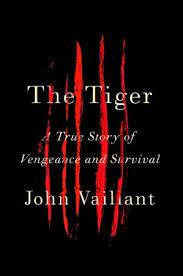
I love me a good story about Russia and this one does not disappoint. Set in the wilds of far eastern Russia in the decades after the decline and collapse of the Soviet Union, this true story is essentially the tale of the hunt for a man-eating Siberian tiger by the rough and ready posse formed to track it. It is also a compelling and complex tale of geopolitical and cultural forces and decline and the fight for the conservation of these majestic and unique animals. Sometimes non-fiction is even more riveting because it is real and true, and this is one hell of a read.
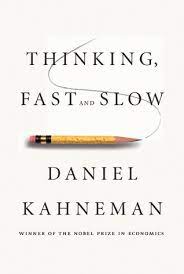
A ‘quake book’, so I learned this year, is one that shakes you to the core and challenges your knowledge and perception of the world. I found this book via one of last year’s favourites ‘The Undoing Project’ by Michael Lewis, which told the story of psychologist Kahneman and his friendship with Amos Tversky. They won a Nobel prize for economics, despite never studying it, for their work on prospect theory. That work led to the exploration, study and defining of human cognition and the heuristics and biases that influence a vast amount of human thought and behaviour. This is not a fast read – but it is important if you are someone with an interest or stake in humanity or cognition. It is rigorous and highly supported with evidence, and weighty as a consequence, but completely worth the effort. Read this book.
Just as in 2020 when Amor Towles’ ‘A Gentleman in Moscow‘ was a great salve for the trials and tribulations of the pandemic, this title came along at the right time in 2021. While nowhere near as extreme in my intentions as Nora Seed, the protagonist, I opened this at a time when we were deep in the belly of the lockdown beast and feeling flat. While it begins darkly, it meanders along interesting and diverting paths including a healthy dab of quantum theory and big philosophical questions to end which results in a hopeful message about living where your feet are and always looking for the good. Funny, dry and very clever, this is a really high quality read.
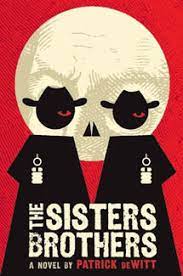
Like many good reads, this came to me via a mixture of word or mouth and serendipity. Low or no expectations are often a way to a really entertaining book and this is no exception. This was recognised with shortlisting for the Booker Prize, telling the story of two assassin brothers on the trail of a bounty across the rapidly vanishing Old West as it is swallowed, inevitably, by modernity and progress. With a distinctive narrative voice and varied point of view, there is plenty of humanity among the dark humour and themes as the pursuit of Herman Kermit Warm (what a name!) unfolds. This is digestible in small chunks if you are under the cognitive pump.
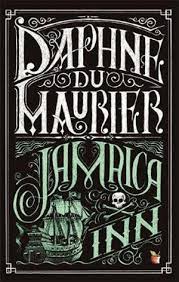
Though dated, I enjoyed this one from du Maurier and her particular brand of British noir. Set in a very gothic Cornwall of the early 1800’s, it follows the travails of the orphaned Mary Yellan who goes to live at the isolated and mysterious inn with her aunt and dodgy uncle. Although the plot is a bit cliched and over the top, there is enjoyment in the strength of Mary amid the backdrop of the oppressive and menacing world she enters, where telling friend from foe is inherently difficult.
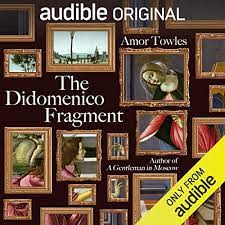
Okay, so this is an audiobook short story – what of it? Towles is easily my favourite author at the moment. His ability to craft compelling stories filled with really interesting characters and maintain an easy , positive tone is exceptional. Narrated by John Lithgow, this is the story of the long retired Percival Skinner, a former Wall Street man who is fighting to come to terms with the fact his cash reserves may not keep him in the manner to which he is accustomed and indeed, entitled. When approached about the sale of a piece of a Renaissance artwork handed down to his extended family, he sees a way to make a bit of cash on the side, if only he can persuade a distant cousin to part with it. Great entertainment for a long walk or drive.
I began this some years ago after being gifted it and was convinced myself I’d read it. Happily, I was wrong. Guiltily, not far into re-reading I determined that it was probably a reluctance to make sense of the nerd-level, microscopic detail O’Brian includes about life on a British Navy vessel in the early 1800’s. Nautical deep trivia aside, which understandably floats the boat of devoted O’Brian fans, the action and adventure is excellent, though less compelling perhaps than the establishing friendship between Captain Jack Aubrey and Stephen Maturin, the mysterious figure he convinces to serve as ship’s surgeon on his first command. Happily, in the spirit of finishing loose ends and making the most of more lockdowns, this proved a welcome and entertaining diversion and now set sail to complete the rest of the series.
Education Title of the Year
Putting on the teacher hat, I must confess that the disruption and resulting lack of continuity left much less bandwidth for wide reading about education. I did enjoy Tom Sherrington’s books out of the UK. ‘The Learning Rainforest’ is a book with really wide scope and some interesting ideas and experiences of implementing evidence-informed practice from the micro to macro levels. It is a great overview which a lot of specific threads to explore. One of these was outlined in his book ‘Rosenshine’s Principles in Action’, which was really handy in shifting some of my instructional practices, even online. That said, the most useful and enjoyable title was ‘Thinking Reading: What every Secondary Teacher needs to know about reading‘ by James and Dianne Murphy. Like many high school teachers, the attitude for most of my career was that reading instruction was not really my job, but the responsibility of primary teachers, even as an English teacher. This view is and was shared by many colleagues in secondary education, and the time has come to admit that we were wrong. Reading instruction, or at least possessing a working knowledge about what reading is and how it works is a critical and often ignored body of knowledge. This is amazing when you think about it. As a classroom teacher, this accessible guide is exactly what I value – a strong evidence base matched with long term classroom experience in a digestible and user friendly manner. Highly recommended.
“What’s in a name? That which we call a rose by any other name would smell as sweet.”
William Shakespeare’s Romeo and Juliet: Act II, Scene II
Some years ago when discovering the work of John Hattie and his meta-analysis of impactful effects on achievement in learning, two things jumped out from the list and lodged in my brain like a splinter.
Teachers not labelling students had an effect size of 0.61. Teacher expectations had an effect size of 0.43. If the hinge point, representing a year of learning, is 0.4, then both elements represent important factors that impact student learning.
What stood out was that students weren’t the influence here. We were.
This knowledge rumbled around in my thinking for some time. I thought about the labels we assign students. I thought about the labels and names I used when describing students. I listened for the words and phrases colleagues used to describe students.
Giving something a name is a completely normal aspect of human cognition. It helps us sort and organise our thinking and cope with the vast quantity of stuff and guff that comes across our mental desks.
And this naming, or labelling process is varied in impact, ranging from positive or neutral to downright ugly and wrong. These are the battlegrounds of contested value and attitude, where the ugliest part of humanity resides. This is where racism, misogyny and hatred live. There is no question of the power of names and labels in our world.
These names and labels appear when we speak about students in meetings or in the staffroom. They are shared openly and officially, but also whispered in meaty, informal teacher gossip when trawling class lists for names on the first day back or sharing war stories over instant coffee and hot, milky tea. They pop up during the moderation and benchmarking of student writing. They appear in reports and emails.
For whatever reason, many times after learning about it I found myself hearing student labels and thinking about those impacts Hattie identified.
So what kind of labels did I hear and use? In the main, they were well intended and usually euphemistic. Each mixed ability class stretched a continuum of struggler to star. They included grinders, plodders and the competent and capable. They had your flighty, sloppy and dopey ones, the lazy and shiftless; the bright, the dim and the flickering. We knew the gifted and talented, weak, limited and less able when we saw them.
Honestly, there were nastier and more nefarious descriptions done in private. Whether apocryphal or not, one story stuck with me of a former colleague who labelled students according to which university they would attend, or not. “They’re a Melbourne, they’re a Monash…oh, they would be lucky to get into Latrobe!… or they are destined for the overalls or the cash register…!”
While there may be varied intent at these extremes, it was the habit that bothered me most.
In time, this reflection led to the question of exactly what is within and outside my control. I made the choice to be rigorous in determining what I could and could not influence and how this might lead to developing habits and behaviours supporting a process for delivering the best outcome for students as consistently as possible.
The Hattie reference was a catalyst for making me conscious of the impact of the labels we give our students.
Logically, I also wondered how students could ever escape them, particularly when I noticed they tended to carry labels across years and groupings, no matter how they performed, grew, developed and changed. These labels weren’t just names, they were often brands and stamps on the permanent record.
More worryingly, official and common practices tended to enshrine these labels, having them stick like mud to a blanket. Again, while the intention was often noble, it was hard to see many opportunities for students to grow out of the labels we’d ascribed.
This led me to the problem of labelling during assessment. The first time I noticed it was when I asked teachers to bring samples of high, medium and low students to moderation. One common habit emerged of teachers going through a pile of papers and digging out students in that band, sometimes before any papers were marked.
This phenomena also stood out in conversations, where teachers referred to their ‘70 students’ or ‘90 students’ and would worry when they did not fall into that category. Often enough teachers would say “I need you to check this paper because this student is a 90 and they have not done very well at all in this essay.”
More worryingly, some teachers branded whole classes as weak, often early in a school year, and it would then come as no surprise to find those classes achieve low standards throughout the year.
I saw it all over the place; not only in my colleague, but in me.
“Think you can, think you can’t; either way you’ll be right.” I started to think about this Henry Ford quote, and the implications of our actions on student achievement.
This was a vague uneasiness rather than a firm picture, but something felt off kilter.
Then I stumbled across Daniel Kahneman’s book Thinking, Fast and Slow, which revealed the world of cognitive biases and heuristics. It explored and unveiled the completely normal human habits in cognition that leave us stuck in loops and ways of thinking that are often not rational, reasonable or based in evidence.
Confirmation bias was one that stood out. This is the tendency we have to only see the things that confirm our views about the world.
The itch about our tendency to label students and the possible impact grew itchier. As my role exposed more and more evidence of this habit in education of labelling, classifying and naming our students, I wondered more about what we could do.
And while it felt like progress, something was incomplete; I even wondered if this phenomenon might be confirmation bias itself. Several times, I almost made it an agenda item in faculty meetings, determined to complete a reflection activity with colleagues.
Unsure of the hunch, I waited.
That said, I worked hard to minimise the labelling of students in my own work. I consciously caught myself using labels and challenged their validity. I adopted the principle of ‘mark the writing, not the writer’ and experimented with ways of minimising bias.
This involved blind marking, shuffling papers and asking colleagues to cross-check samples. I looked to benchmarking more than moderation, taking the time to de-identify student writing to give the best chance of fairness. I collected excellent samples to work from, hoping to systemise the standard and reduce the chance of bias driving judgement.
But is it possible to ever eliminate bias? I don’t think so – but we can reduce the level a little. This is what Olivier Houde calls cognitive resistance; taking steps to minimise or be aware of our biases.
This study uncovered an ‘expectancy advantage’ during a year long study of a school, where teachers were told that some students had been identified as likely to be ‘growth spurters’ after completing a school wide test to identify them. This was actually misdirection on the part of researchers, as the identification test was simply an IQ test and the ‘growth spurters’ were selected at random.
In essence, the study found that students who were expected to do better actually did, but they also found that these ‘growth spurt’ students were treated differently by their teachers.
In essence, because their teachers expected students to do better, they did better, therefore, the ‘expectancy’ or ‘Pygmalion’ effect was identified.
Furthermore, the opposite of the Pygmalion effect in psychology is known as the Golem effect, where low expectations lead to lower achievement.
Both effects fall under the category of self-fulfilling prophecy, and the study by Rosenthal and Jacobson appears to confirm such a thing exists, despite strong debate over the validity of the original study.
As Bregman contends, further investigation since has suggested the size of the effect outlined in the study was questionable, but the existence of it is beyond doubt.
One comment by Rosenthal stood out. He thought it “shocking how much teaching is done by teachers who think students can’t learn.”
Which leaves us with an uncomfortable question. What do we do about it?
The first step is to acknowledge that evidence suggests the labels we assign students impacts on their achievement.
The locus of control here then is us, the teachers, not the students.
This implied responsibility says we must work to limit the negative impact of our labelling, adopting and embedding strategies and habits that build cognitive resistance to the natural biases and beliefs we hold.
We will never be perfect in our use of labels and names, nor should we strive for perfection. Instead, we should build a process to minimise the impact of these labels over time.
We should explicitly aim to reduce and maybe eliminate subjective and negative labels that endure without evidence.
How are our students meant to grow beyond these labels if we confine them? If we know that prophecies can be self-fulfilling, and these prophecies live in the names and labels we give students, then why not work to challenge their origin and validity?
We don’t have to believe everything we think. Labels and names are powerful things in the realm of education.
Zeno of Citium was the son of a wealthy trader in Ancient Greece. On a journey from Phoenicia to Piraeus, his ship and cargo were lost, stranding him in Athens.
There, he discovered the teachings of Socrates and took the first step on a pathway of learning that birthed the Stoic school of philosophy.
According to one biographer, Zeno joked “Now that I’ve suffered shipwreck, I’m on a good journey.”
In the same spirit, I decided to frame this pandemic as a shipwreck and make it the beginning of a good journey.
Here was a chance to strengthen learning habits and use time better. Here was, in some ways, what we’d begged for all these years. Here was the ‘more time’ we could never find.
Scarcity became abundance.
Once a decision is made, one can only hope the ‘mighty forces’ Basil King described come to our aid.
Almost a year later, while I can’t report divine intervention, powerful situational forces have certainly influenced the journey. Fate was very kind, as it was for many ‘knowledge’ workers fortunate enough to maintain employment with minimal interruption, aside from staying home.
The impact of intermittent lockdowns has been so varied that, while broadly affected in the same way, at the granular level experiences reflect the same diversity found in the population.
As management and containment made kingdoms of households and entire worlds of neighbourhoods, a withdrawal inward was natural.
For many of us, this proved confronting. That said, history also testifies that we are not the first to tread this ground.
Yet unlike other pandemics, from the Antonine plague to the Spanish Flu, an important difference in the COVID-19 experience is marked by the hyper-connectivity we know through technology.
We effortlessly pass time with on-demand media via endless platforms. We doomscroll news feeds and social media – always on, always hunting. We play online games, make and watch videos, all the while sliding into life as digital content super consumers.
There is literally more distraction to hand than any human being has ever known. There are more rabbit holes than rabbits.
Could Robert Frost have truly known the extent way leads to way when he wrote the famous poem?
What would he make of Google? Would he catch himself at 2am searching for celebrities who served in World War Two?
In lockdown, screens became portals to socialising and work, exponentially enhancing potential for passive dead time far in excess of the dosage we need and well beyond one that is good.
Additionally, digital life in the pandemic proved a kind of Hogwarts sorting hat, dividing idiots and kooks from the rest.
It exposed and laid bare a confronting truth. Namely, that which divides us and how readily we organise into tribes bound by social proof and norms outside the blustery, rigorous shaping of the past.
Social media has left many of us proverbial frogs in the well. The sunlight and nurture of these narrow spaces are curated by feed bubbles and algorithmic echo chambers. We agree to this somewhat Faustian pact when we tick ‘yes’ to ‘I have read and understood the terms and conditions.’
The net effect is stronger division. We are all right and correct beyond former burdens of proof. We all possess evidence to support our claims. We all know the real truth and everyone we know knows it too.
It was almost like a second, digital shipwreck from which to launch another good journey.
Which leads to a question – awash with such information, supported with alleged facts and what now passes for reason, where should we place our faith? Who or what do we believe? What is the best bet?
Recognising this, amid habitual scrolling of socials and endless dead eyed info-gorging, which often left me miserable, I withdrew into analogue books and the voyeuristic electronic realm of Twitter. This is a well understood forum of hateful debate, but also a place of learning if you do it right.
Wearing an educator’s hat, this exploration revealed how little I truly knew or understood about the process of learning as opposed to the art of teaching. It forced me to reflect on my understanding and beliefs around what made for good teaching and learning.
In turn, this led to the educational battleground between devotees of knowledge rich and skill-based curriculum models.
In educational debate, one soon learns to be both aware and wary of often conflicting ‘research’. One also learns to resist the allure of halo lit fandom of edu-celebrities.
There is also good reason for wariness of one’s own thoughts and beliefs.
Reading Daniel Kahneman’s Thinking, Fast and Slow revealed the litany of cognitive biases we carry as human beings, supporting the need to foster the habit of sensible and healthy scepticism.
It can be really hard to distinguish gold from micah, but one ‘good bet’ Bronwyn Ryrie-Jones and many others argue for is cognitive science.
Why science?
In a world where scientific knowledge is so readily dismissed and overlooked, why should we lean on what science tells us? Why not believe the celebrity chefs, sports stars and comedians? Why not listen to the politicians?
Carlo Rovelli, quantum physicist, declares the answer is easy.
“Science is not reliable because it provides certainty. It is reliable because it provides us with the best answers we have at present… It is precisely its openness, the fact that it constantly calls current knowledge into question, which guarantees that the answers it offers are the best so far available.”
Carlo Rovelli (2017) Reality is not what it seems. The journey to quantum gravity.
The implication is that science provides the most certainty while allowing room for growth, hopefully avoiding inertia and stasis, or worse, the wasted time and breath involved in waging intellectual civil war.
I am also wary that the often derided and debunked ‘fads’ in education were once solid ground to build your professional development. I attended sessions on learning styles, multiple intelligences and thinking hats. I lived through the coloured paper trend and distributed overlays to dyslexic students. I conducted the ‘which learner are you? audits.
I remember thinking that content was just a contextual vehicle for important skills. Teachers should be free to choose any material they liked and curriculum statements should codify skills, thereby reducing explicit content within vast documents more suited to propping open doors or curing insomnia than providing teachers with actionable information.
A bigger mind shift was required. I’ll admit to being a skills-focussed teacher who thought content was a dirty word.
The thing is, at some point you need to take action and stop thinking and pondering.
I like the responsive , explicit, quality teaching movement because it reflects the truth of small changes repeated over time and their measurable impact. It is the recognition or reminder that almost everything we do in a classroom has an effect, good and bad.
The central and adjacent thought leaders here are people like Willingham, Lemov, Wiliam, Bennett, Sherrington and Christodoulou, to name a few.
Via Twitter, Frost’s way led on to way and the research and experience of Rosenshine, Hirsch, Sealy and the Murphys passed across my view. They became the mentors and guides of this good journey across all manner of relevant and thought provoking ideas.
Lost at times, inspired and energised at others, I always returned to first principles.
Teaching is an act of service for our students. How do we best serve them? By helping them make their way forward, by encouraging and picking them up when they get lost or fall behind, and by helping them approach life and the world with a sense of excitement and a desire to be involved.
Ultimately, they make their own choices, but while they are in our rooms, we have an amazing power to set the climate of the classroom and provide access to learning that helps them move forward.
The ‘tingly’ moments in teaching, addictive as any pleasure or vice, are not enough to live on. Nor, alone, do they provide nourishment. They can only serve as the sweet fruit for the journey, rewards for repetitive nurture and toil.
These good, repetitive and effective actions must be informed by good bets, not only intuition.
If we are being honest, skills without knowledge are just accidents or beginner’s luck.
Cognitive science and theories of learning offer solid information on how the brain works and by implication, how people learn. This is critical knowledge to inform our practice.
As custodians of the teaching profession, it is our duty to avoid the temptation of smarmy criticism and social media warfare from the secure digital bunkers. We must, to paraphrase Seneca, turn ‘words into works’.
Teaching is an act of good in the service of others. It must be that at its core, for anything else feels petty, constrained and useless.
Again – good teachers must seek to move and guide our students forward from wherever they are to a place they can access the substantive knowledge and skills to contribute and produce in our society and world.
It is a bold and worthy objective. It is a wicked problem to realise and the summit of hard fun and productive struggle.
A blend of knowledge and skills is critical. It is also critical that these knowledge and skills are grown in the blended environment of digital and analogue.
If we start with science, adopting Zeno’s mindset, then our direction is based on a good bet.
Until we have better answers, these must light the way.
It is common to keep an eye on big issues. Global pandemic. US politics. Brexit.
But sometimes, important issues arise way down at the micro level, where the geopolitics of daily interaction play out.
The following declaration is more observation than gripe, with a hint of complaint.
Waiters need to write stuff down.
Writing is humanity’s greatest invention. It allows us to travel through time, share collective wisdom, break through stubborn barriers to progress and understanding.
Without writing, there is no reading, and without reading we are stuck in a room walled by our own ignorance.
The phenomenon of writing refusal in restaurants, bars and cafes is a hidden tragedy of the modern world.
Where once it might be the domain of silver service waiters in high-end restaurants, whose skill in remembering vast orders reflected higher status, it is now the standard modus operandi of every corner cafe and burger joint hack.
In a wide ranging and deep study of, well, my friendship group, it was revealed that more commonly, too commonly, orders are cocked up by a distracted waiters with poor working memories.
Of course, in a world filled with human tragedy, riddled with a contagion, complaining about the odd missed order is the very epitome of first world entitlement.
Which is all very true.
But what is the acceptable error frequency for a transaction involving brunch?
I argue that every now and again, if they are busy or on their first day, that missing the odd hash brown or scrambling rather than poaching eggs is okay. I can live with your cold milk on the side instead of hot, or forgetting the butter…
However.
If we can agree to operate from the first principle that a ZERO error threshold is the most optimal, then the rise of waiter memory error is very clearly sub-optimal.
I know, I know, it is hard to remember all those things. The proliferation of adjectives and bespoke beverages, pimped up with the bastardised Dr Moreau milk imposters, brings cognitive overload for the customer, let alone wait staff.
Yet we cannot escape the truth that civilisation is bound by fragile conventions like these mini social contracts.
Maybe punters are on one coffee a day, bringing the heaviest of responsibilities to bear on barista and waiter. Maybe it is their cheat day after a period of fasting and denial, or perhaps it is a special occasion like a birthday. Perhaps customers are waiting for a sign from a higher power, and the delivery of a meal out can restore their faith in the universe?
All of which is flung onto the bonfire of chance by these hospitality coolhunters with ironic hats and serious tattoos. It looks like, if you ask, that writing things down on a piece of paper is very uncool and does not reflect the standard of excellence required to work at (insert business name here).
And we know it gets busy and you have to remember a lot of things and you are covering all these tables and you are understaffed after the lockdown and it is really hard to find good help and you can usually remember all the orders, except when you don’t. And anyway, remembering is hard.
Yes, it can be, as cognitive science is more than aware.
If only humanity had invented a low-tech, simple system of bolstering our frail working memories against the curse of cognitive overload?
Just write it down. Please. For the sake of civilisation…
One gift of the pandemic was more time for reading. The reading habit, neglected for too many years, proved a shining light in a most challenging year.
Conscious of the glut of reading lists swelling blogs and social feeds like autumn leaves, yet mindful of their important role in providing fuel for the bookish bonfire, here are some recommendations based on what I read in 2020.
There are five fiction titles, five non-fiction and three honourable mentions, listed without sequential significance. Enjoy.
Fiction
A Gentleman in Moscow by Amor Towles
The first book of the year and my favourite. More than slightly prescient, too, considering the forced isolation that followed. Count Alexander Rostov is a terrific character for our times despite being well outside them. The story follows his life of house arrest in Moscow’s luxury Metropol hotel across thirty or so years of the Soviet era from 1922 to 1954. As everything representing his status and rich life is removed, Rostov maintains an optimistic and expansive attitude, cheerfully embracing fate without compromising his principles. This is a transportive and beautifully written novel that I recommended more than any other. Read it.
Snow Crash by Neil Stephenson
This is Ready Player One for grown ups. Published in 1992, this dystopian story is set in a world where capitalism reigns supreme and virtual living is preferred to reality by most. It is a darkly funny romp and Stephenson creates a rich and engaging vision of an imagined future. The aptly named protagonist – um – Hero Protagonist, is an early developer of this virtual universe and accidentally finds himself hot on the trail of a mysterious and deadly computer virus that somehow reaches into the real world. Clever, entertaining and relevant.
Neverwhere by Neil Gaiman
The early part of the year saw a deeper dive into the work of Neil Gaiman, including a final public outing in February for a live Q and A in Melbourne where the greatest issue was bushfires – aah, those were the days! This is The Graveyard Book for grown ups, maybe? It rests firmly within Gaiman’s noir-ish horror fantasy wheelhouse. After an act of kindness, young businessman Richard Mayhew crosses into the shadowy otherworld below the streets of London. His journey, dotted with a remarkable cast of allies and villains, is a terrific tale to escape with, from young adults onwards.
Rules of Civility by Amor Towles
Towles was a merchant banker before turning to a career in writing and this was his first novel. This kind of talent appears greedy, but this book underlined his bona fides as a writer and weaver of great historical stories. Set mostly in New York of the 1930’s, we follow the fortunes of Katey Kontent as she makes her way in publishing, straining against the confines of society and expectation. As with A Gentleman in Moscow, the characterisation and setting are a real highlight, and it is astonishingly well written.
V2 by Robert Harris
I discovered Harris more than twenty years ago via his early novel, Fatherland, and confess an unashamed enjoyment of historical fiction with a cerebral and compelling plot. Though he lost me during the ancient Rome period, recent titles have me back on board. This is a parallel narrative set in the latter years of World War Two, when Germany’s V2 rockets rained down on London and surrounds. Willi Graf and Kay Connolly are characters on two sides of the firing line whose fates are entwined more than they know. Written wholly during the first UK lockdown of 2020, it was a perfect decompression read after a long year, offering a nice blend of fact and fiction with just the right amount of historical rocket nerdiness.
Non-Fiction
Figuring by Maria Popova
This is a remarkable book in so many ways, if for nothing else the depth of knowledge and effort behind it. Popova has published her blog, Brainpickings, for more than a decade which is a testament to her love of poetry, science, mathematics and literature. Figuring is an opus that reveals the somewhat obscured (well, definitely to me) tale of a range of historical figures, mostly women, at the intersection of these points over four centuries. It is actually really hard to describe, so I’ll say that it really shifted my knowledge and view of science and literature, who we are encouraged to believe are incompatible. Like all good non-fiction, this book pushes the boundaries of understanding and shines a light on a topic that feels so critical, albeit embarrassingly concealed. Hard fun, but brilliant.
Principles by Ray Dalio
This book was the fly that kept returning to bash on my mental window. I read it out of curiosity and it exceeded my expectations. Ray Dalio built an extremely successful investment house over thirty years and never intended to write a book. This is a fascinating insight into the underlying principles employed and refined over his career. Initially written for employees so he did not need to explain everything, it grew into a comprehensive and rich reference. Though dry in places, the wider value comes from the ability to explore the mind and rich experience of Dalio. It is a reminder of the power of books to gain access to the wide variety of human experience.
The Undoing Project by Michael Lewis
Daniel Kahneman and Amos Tversky were a most unlikely duo who had a massive impact on human understanding of how our thinking minds work. They met as young psychologists in Israel before forging a partnership that produced a body of research work that fundamentally changed our understanding of human motivation and behaviour. Lewis explores the nature of their friendship more than the work and it is here the real magic of the story comes alive. This was a lot of fun to read.
A Dream About Lightning Bugs by Ben Folds
The Ben Folds Five album ‘Whatever and Ever Amen’ played on high rotation when I was at university and Folds is an intriguing character fondly remembered. Music biographies have never featured too prominently in my reading, but this one broke the mould in many ways, mostly for the honest self-appraisal at the expense of a biased recount of history. There is little whitewashing by Folds – he knows he can be a prick – and it also contains a good deal of exploration and analysis of his creative process and experience of fame. Folds is a wild and forthright host and this was a great read.
The Checklist Manifesto by Atul Gawande
Let me confess to a deep hatred of routine and a long history of mocking those poor souls fixated on protocol and process. Sure, I write lists, but the thought of a living life by checklist seemed like prison. Gawande is a surgeon who took on the challenge of developing a surgical checklist for the World Health Organisation in the hope they might improve related mortality rates in hospitals around the world. In the process, Gawande discovered the power and simplicity of checklists and how one could borrow great ideas from seemingly unrelated fields – like airlines. This is a great example of the unexpected benefits of reading outside your familiar box.
Honourable Mentions
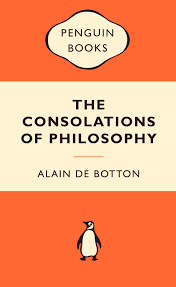
The Consolations of Philosophy by Alain de Botton
This is a terrifically accessible philosophical exploration of what it means to live a good life via six philosophers and their work. I had long avoided de Botton due to pretentious name prejudice and happily admit my wrong headedness. If you ever find yourself feeling sad or melancholy, this is a good place to start and a great place to revisit.
The Lessons of History by Will and Ariel Durant
This little book is the condensation of a lifetime of work by this most interesting couple. Profound observations about humanity bounce out of every paragraph and one risks a sore neck with all the nodding in agreement. The writing is first class, reminding us that great literature is not the soul possession of fiction.
Running the Room by Tom Bennett
This is a book for teachers, one I wish was around when I was starting out. Released late in 2020, it is a most rare professional reading title that manages to be insightful, rigorous and funny at the same time. If you teach, this is a must read. If you know a teacher, tell them about it.































 Charlie Hynes